
7 Mall-Based Fitness and Wellness Studios Perfect for Busy Professionals
Your lunch break just got more productive. Instead of scrolling through your phone in the office pantry, you could be halfway through a HIIT session at a studio two floors above your favorite food court. Singapore’s shopping malls have become unexpected fitness hubs, offering working professionals a practical solution to the eternal struggle of finding time to exercise.
Fitness studios in malls for professionals solve the time crunch by placing gyms, yoga studios, and specialty workout spaces inside shopping centers you already visit. These locations offer extended hours, no commute penalty, and the convenience of combining errands with exercise. From boutique cycling studios in Orchard to climbing gyms in suburban malls, you can build consistent fitness habits without adding travel time to your already packed schedule.
Why mall-based fitness works for time-strapped professionals
Traditional gyms demand a commute. You leave the office, fight traffic, work out, shower, then head home or back to errands. That’s easily 90 minutes for a 45-minute workout.
Mall studios eliminate that friction. They sit where you already shop, eat, and meet friends. You can grab groceries after spin class or attend a meeting at a nearby cafe post-yoga. The mental barrier drops when fitness slots into existing routines instead of creating new ones.
Many professionals report higher consistency with mall studios. The proximity makes it harder to skip. When your gym sits between the MRT station and your favorite lunch spot, you run out of excuses.
Mall locations also mean better infrastructure. Parking validation programs, accessible changing rooms, and food options for post-workout meals all exist because these spaces serve shoppers first. You benefit from amenities built for retail convenience.
Types of fitness studios you’ll find in Singapore malls
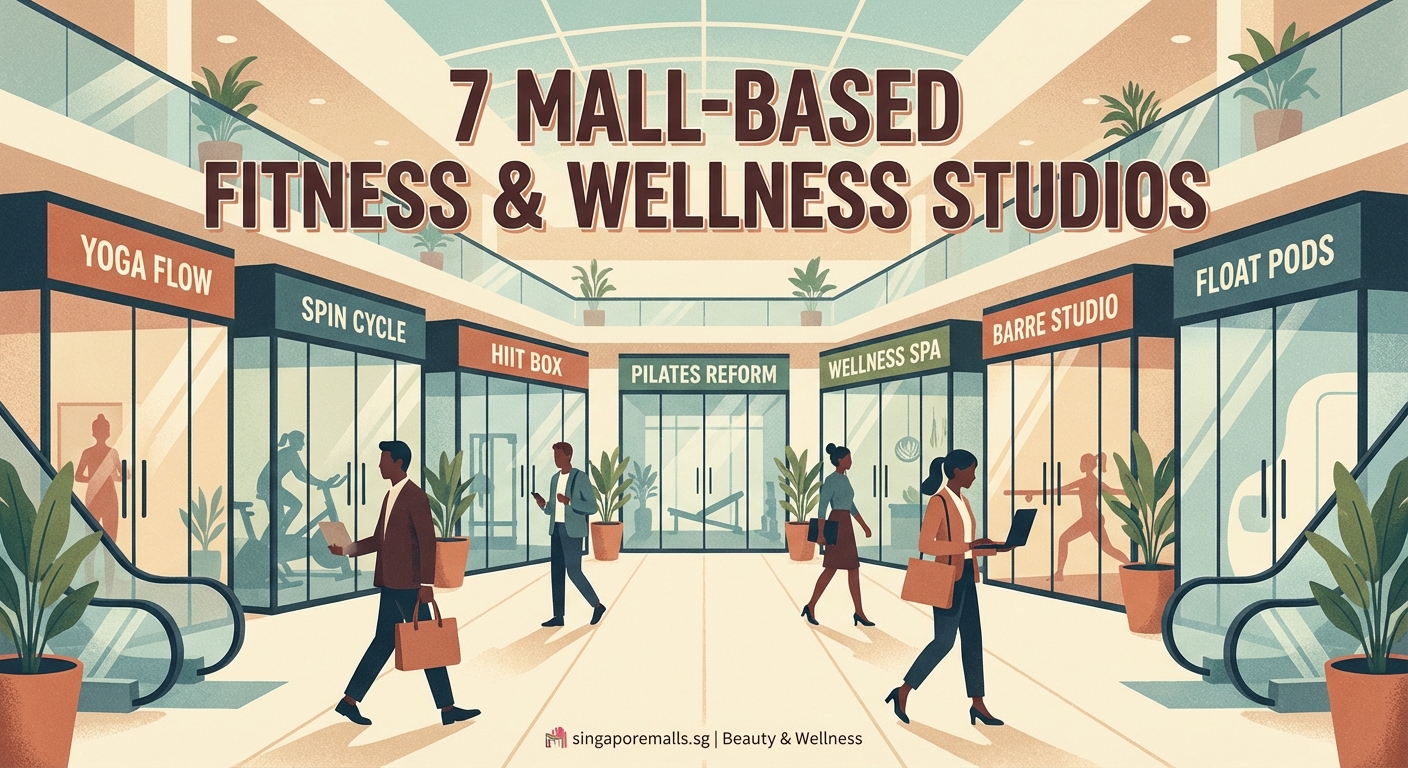
Shopping centers house surprising variety. Here’s what you’ll encounter:
- Boutique cycling studios with rhythm-based classes and performance tracking
- Yoga and Pilates centers offering everything from hot yoga to reformer sessions
- Functional training gyms focused on strength, mobility, and athletic performance
- Barre and dance studios combining cardio with toning movements
- Climbing gyms with bouldering walls and rope climbing for full-body workouts
- Boxing and martial arts studios teaching technique while burning calories
- Specialized recovery spaces featuring stretching, massage, and mobility work
The mix caters to different schedules. Some studios run 30-minute express classes for lunch breaks. Others offer evening sessions that let you decompress after work before heading home.
“The best workout is the one you’ll actually do. Location matters more than equipment when building a sustainable fitness habit.” – Fitness industry consultant
Finding the right studio for your schedule
Not all mall fitness studios operate the same way. Here’s how to match your needs with the right option:
-
Check class schedules against your work calendar. Some studios front-load morning classes, others peak at lunch and evening. Look for patterns that align with when you can realistically attend.
-
Test the commute from your office. A 15-minute walk beats a 5-minute drive if parking adds 10 minutes of circling. Time the full journey during your intended workout window.
-
Evaluate shower and locker facilities. If you plan to return to work, you need reliable changing rooms. Ask about towel service, hair dryers, and storage options during your trial class.
-
Understand membership flexibility. Some studios require annual contracts, others sell class packs or offer month-to-month options. Match the commitment level to your certainty about maintaining the routine.
-
Factor in secondary benefits. Studios in malls with good food courts let you refuel properly. Locations near late-night shopping options support evening workout schedules.
Common mistakes professionals make with mall fitness studios
| Mistake | Why it happens | Better approach |
|---|---|---|
| Joining too many studios at once | Excitement about convenience leads to over-commitment | Start with one studio, build consistency for two months, then add variety |
| Ignoring peak hour crowding | Lunch and 6pm slots fill fast at popular locations | Book classes in advance or test off-peak times like 4pm or 8am |
| Skipping trial classes | Pressure to commit before testing the environment | Use free trials at multiple studios before buying packages |
| Underestimating shower time | Rushing through post-workout cleanup creates stress | Add 15 minutes to your workout window for proper hygiene |
| Forgetting parking costs | Hourly rates add up if workouts run long | Look for validation programs or use public transport |
The biggest trap is treating convenience as a substitute for planning. Mall proximity helps, but you still need to block calendar time, pack gym clothes the night before, and set realistic expectations about frequency.
How to maximize your mall workout routine
Building consistency requires more than showing up. Try these strategies:
Anchor workouts to existing habits. If you grab coffee at a mall cafe every Tuesday, schedule your spin class right before. The established routine makes the new behavior stick faster.
Use mall amenities strategically. Many professionals combine workouts with other tasks. Drop off dry cleaning, attend a class, then pick up dinner ingredients on the way out. This stacking saves separate trips later.
Join studios with multiple locations. Some fitness chains operate in several malls. Membership at one grants access to all, letting you work out near your office on weekdays and near home on weekends.
Track your actual attendance. Apps and class credits create data. Review monthly to see if you’re using the membership enough to justify the cost. Adjust your plan if usage drops.
Connect with regular attendees. Familiar faces create accountability. You’re less likely to skip when people notice your absence. Some studios facilitate this better than others through community events or social platforms.
Comparing costs between mall studios and traditional gyms
Mall fitness studios typically charge more per visit than big-box gyms. A single class might cost $25 to $40, while monthly unlimited packages run $180 to $280.
Traditional gyms charge $80 to $150 monthly for full access. The math seems clear until you factor in usage. If you attend a traditional gym twice weekly, you pay $2.50 per visit. If you skip weeks due to inconvenience, the per-visit cost climbs.
Mall studios work differently. You pay for guaranteed attendance because the location removes barriers. Many professionals find they work out three to four times weekly at mall studios versus once or twice at distant gyms.
The real comparison is cost per workout attended, not cost per month paid. A $220 monthly mall membership with 12 visits costs $18 per session. A $100 gym membership with 4 visits costs $25 per session.
Some mall locations offer corporate packages. Check if your employer has partnerships that reduce rates. Companies near major shopping districts often negotiate group discounts for staff.
Peak times and how to avoid crowds
Most mall fitness studios see three rush periods:
7am to 9am draws morning people who work out before office hours. These classes fill with regulars who book weeks in advance.
12pm to 2pm captures the lunch crowd. Professionals squeeze in 45-minute sessions between meetings. Expect full classes and competition for shower stalls.
6pm to 8pm attracts after-work exercisers. This is the busiest window, especially Monday through Thursday.
Off-peak opportunities exist. The 10am slot works for professionals with flexible schedules or those who start work later. The 4pm window catches people leaving early or working from nearby. Weekend mornings before 10am offer space without the weekday intensity.
Some studios implement surge pricing, charging less for unpopular times. A 3pm Tuesday class might cost $15 versus $30 at 7pm. If your schedule allows flexibility, you save money and avoid crowds.
Equipment and amenities that matter
Not all mall studios invest equally in facilities. Here’s what separates good from great:
Ventilation systems matter more in enclosed mall spaces. Poor air circulation makes intense workouts miserable. Visit during peak hours to assess air quality.
Locker security varies widely. Some studios provide day lockers only, others offer monthly rentals. If you plan to store work clothes or laptops during class, confirm security measures.
Shower pressure and temperature affect whether you can realistically return to work. Weak water flow or inconsistent heat creates problems when you’re on a tight schedule.
Equipment maintenance shows in details. Worn yoga mats, bikes with squeaky resistance knobs, or climbing holds that spin indicate poor upkeep. Well-run studios replace gear before it fails.
Studio size relative to class capacity determines comfort. A room designed for 15 people but packed with 25 creates a cramped, frustrating experience.
Ask about these specifics during trial classes. Staff should answer confidently. Vague responses about “regular maintenance” or “we’re working on it” signal potential issues.
Combining fitness with other mall activities
One major advantage of mall studios is errand efficiency. Smart professionals chain activities:
A typical efficient evening might include a 6:30pm yoga class, followed by dinner at a halal restaurant in the same building, then grocery shopping before heading home. Total time: 2.5 hours. Separate trips would take 4 hours across different days.
Some malls with spa and wellness centers let you book massage appointments after intense workout sessions. The combination turns fitness into genuine self-care rather than another task to complete.
Weekend warriors use mall studios differently. A Saturday might start with a climbing session, continue with brunch at a hidden gem cafe, then shift to shopping or entertainment. The mall becomes a destination rather than just a gym location.
Parents sometimes coordinate schedules around malls with play areas. One parent works out while the other supervises kids, then they swap. The setup works because everyone stays in the same building.
Membership programs and how to save money
Mall fitness studios compete aggressively for members. Understanding their economics helps you negotiate better deals.
Introductory offers typically provide the best value. New studios or locations offer founding member rates that lock in lower prices permanently. These promotions usually last 4 to 8 weeks after opening.
Class pack expiration policies vary dramatically. Some studios give 6 months to use a 10-class pack, others allow 12 months. Longer validity periods suit inconsistent schedules better.
Referral bonuses reward bringing friends. Many studios offer free classes or membership credits for successful referrals. If you’re joining anyway, ask existing members for their referral codes so they benefit.
Corporate wellness programs sometimes subsidize memberships. HR departments partner with studios to offer discounted rates. Even if your company doesn’t have formal partnerships, ask studios about corporate packages. They may create one if enough colleagues express interest.
Credit card promotions occasionally include fitness studio discounts. Some banks partner with specific chains for cashback or reduced rates. Check how to stack credit card promotions with mall discounts for detailed strategies.
The worst financial decision is paying for unused memberships. Start small. Buy a 5-class pack before committing to unlimited monthly access. Track your attendance honestly. If you’re not using it, cancel without guilt.
What to pack for mall-based workouts
Your gym bag needs differ from home gym setups. Mall logistics require specific preparation:
- Work-appropriate outfit in a separate compartment to keep clean clothes away from sweaty gear
- Minimal toiletries since most studios provide basics (but bring your own if you have preferences)
- Flip-flops for shower use, even if the studio looks clean
- Plastic bag for wet towels and used workout clothes
- Portable phone charger because you’ll likely use your device more while moving between activities
- Reusable water bottle to avoid buying drinks repeatedly
- Small lock if the studio’s locker system requires your own
Some professionals keep duplicate toiletry sets in their gym bags to avoid forgetting items. A $20 investment in backup supplies prevents the “I forgot deodorant” crisis before an important meeting.
Making the switch from traditional gyms
Transitioning from a conventional gym to mall-based studios requires mindset adjustment. Traditional gyms offer equipment variety and freedom to design your own workouts. Mall studios provide structure and community but less flexibility.
The shift works best when you’re honest about your actual gym behavior. If you rarely used the weight room or swimming pool at your old gym, you’re not losing much by switching to a specialized studio. If you genuinely enjoyed varied equipment, a single-focus studio might feel limiting.
Many professionals maintain hybrid approaches. They keep a basic gym membership for weekend workouts or specific training, while using mall studios for convenient weekday sessions. This costs more but provides flexibility.
Others fully commit to mall studios and supplement with home equipment for variety. A set of resistance bands and a yoga mat handle days when schedules don’t align with class times.
The key is matching your solution to your actual behavior, not your aspirational self-image. You might want to be someone who designs custom workout programs, but if you never actually do it, structured classes serve you better.
Staying consistent when motivation drops
Convenience solves logistics, not motivation. Even with a studio in your favorite mall, you’ll face days when you’d rather skip.
Professionals who maintain long-term consistency use these tactics:
Pre-book classes at the start of each week. The financial commitment (many studios charge for late cancellations) creates accountability. You’re less likely to skip when money is on the line.
Schedule workouts as non-negotiable calendar blocks. Treat them like client meetings. Don’t move them for non-urgent requests.
Find a workout partner with similar schedules. Mutual accountability works. You show up because someone else is counting on you.
Track progress beyond weight. Note energy levels, sleep quality, or stress management. These improvements often appear before physical changes and provide motivation when scale numbers plateau.
Rotate between different class types. Boredom kills consistency faster than difficulty. If your studio offers variety, use it. If not, consider splitting time between two studios with different focuses.
Give yourself permission for imperfect attendance. Aiming for twice weekly is better than planning five times and feeling guilty when you hit three. Set realistic targets.
When mall fitness studios might not work
Honesty matters. These locations aren’t ideal for everyone.
Serious strength trainers need heavy equipment and space. Boutique studios rarely provide adequate barbells, squat racks, or platforms for Olympic lifting. If you’re training for powerlifting competitions, mall studios won’t cut it.
People who hate group settings will struggle with class-based formats. Most mall studios emphasize community and group energy. If you prefer solitary workouts with headphones, traditional gyms suit you better.
Budget-conscious beginners might find premium pricing prohibitive. If you’re just starting and uncertain about long-term commitment, a $50 monthly gym membership provides lower-risk entry than $200 studio packages.
Professionals with extremely unpredictable schedules can’t leverage convenience if they never know when they’ll be free. Class-based formats require some scheduling predictability. If your calendar changes hourly, 24-hour traditional gyms offer more flexibility.
Those requiring specialized equipment for injury rehabilitation or specific sports training won’t find what they need. Mall studios cater to general fitness, not specialized athletic development.
Fitting workouts into your actual schedule
The gap between planned workouts and completed workouts defines success. Here’s how professionals bridge it:
Morning exercisers need evening preparation. Lay out gym clothes, pack your bag, and set multiple alarms. The 6am class sounds great until your alarm rings. Reduce friction by preparing everything the night before.
Lunch workout people should block 90 minutes, not 60. You need time to walk to the mall, change, work out, shower, and return. Underestimating creates stress and rushed sessions.
Evening exercisers benefit from going straight from office to mall without stopping home first. Once you sit on your couch, inertia wins. Keep gym clothes at the office and head directly to class.
Weekend warriors can afford longer sessions. Use this time for workshops, extended classes, or trying new studio types. Weekends provide experimentation opportunities without weekday time pressure.
Variable schedule professionals should buy class packs instead of unlimited memberships. You pay only for what you use, and the expiration pressure motivates attendance without creating guilt over unused unlimited access.
Getting the most from your studio experience
Showing up is half the battle. Maximizing each session requires additional thought:
Arrive 10 minutes early for equipment setup and mental preparation. Rushing in at the last second starts you frazzled.
Communicate with instructors about injuries, limitations, or goals. Good teachers modify exercises for individual needs, but only if they know what you require.
Focus on form over intensity initially. Poor technique leads to injury and forced breaks. Build movement quality first, then add speed or weight.
Stay after class for questions. Instructors often provide personalized advice when you ask specific questions about technique or programming.
Use studio apps to track attendance and progress. Many platforms show your workout history, helping you maintain consistency and spot patterns.
Participate in studio events like workshops or social gatherings. Stronger community connection increases long-term retention.
Your fitness routine starts where you already are
The best fitness studios in malls for professionals aren’t necessarily the newest or trendiest. They’re the ones you’ll actually attend consistently because they fit seamlessly into your existing life patterns.
Start by mapping your current routines. Which malls do you already visit? What times do you have genuine availability? What workout styles have you enjoyed in the past? The answers point you toward studios worth trying.
Book trial classes at two or three options. Experience the environment, test the commute, and assess whether the vibe matches your personality. Then commit to one location for at least two months before judging results.
Your workout consistency matters more than workout intensity. A moderate routine you maintain beats an ambitious program you abandon after three weeks. Mall-based studios remove one major barrier to consistency. The rest is up to you.