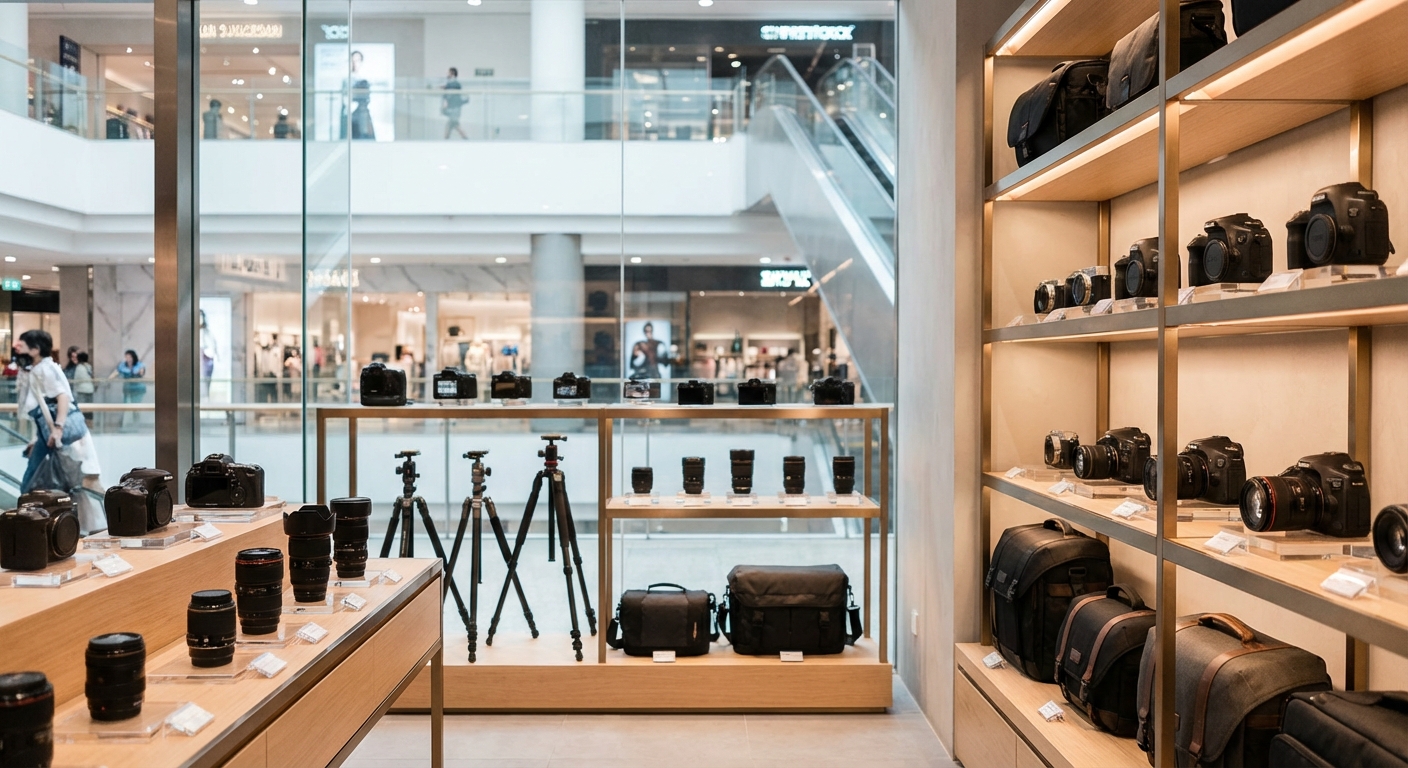

Top 5 Camera and Photography Equipment Stores in Singapore Malls for Enthusiasts
Shopping for camera gear in Singapore means you get to test lenses, compare sensors side by side, and ask questions to staff who actually shoot. Online reviews only tell half the story. The weight of a camera body, the feel of a grip, the clarity through a viewfinder matter when you’re spending hundreds or thousands of dollars.
Singapore’s best camera shops offer hands-on testing, price matching, and expert advice across multiple mall locations. From flagship stores in Orchard Road to specialist retailers in Peninsula Plaza, you’ll find competitive pricing, warranty protection, and staff who understand photography. Visit during weekday mornings for personalized service and bring your current gear to test compatibility before buying.
Where to find camera shops in Singapore malls
Most camera retailers cluster in three key areas. Orchard Road houses the flagship stores with the widest selection. Peninsula Plaza near City Hall specializes in second-hand and vintage equipment. Sim Lim Square offers competitive pricing but requires more research on seller reputation.
The major malls along Orchard Road’s shopping district include ION Orchard, Ngee Ann City, and Plaza Singapura. Each hosts at least one authorized camera retailer.
Peninsula Plaza on North Bridge Road concentrates multiple independent dealers on the first and second floors. You’ll find rare film cameras, manual lenses, and collectors’ items here.
Sim Lim Square remains the go-to for electronics, but camera shops there vary in quality. Stick to established names with physical storefronts rather than individual stalls.
Top camera retailers worth visiting
Alan Photo
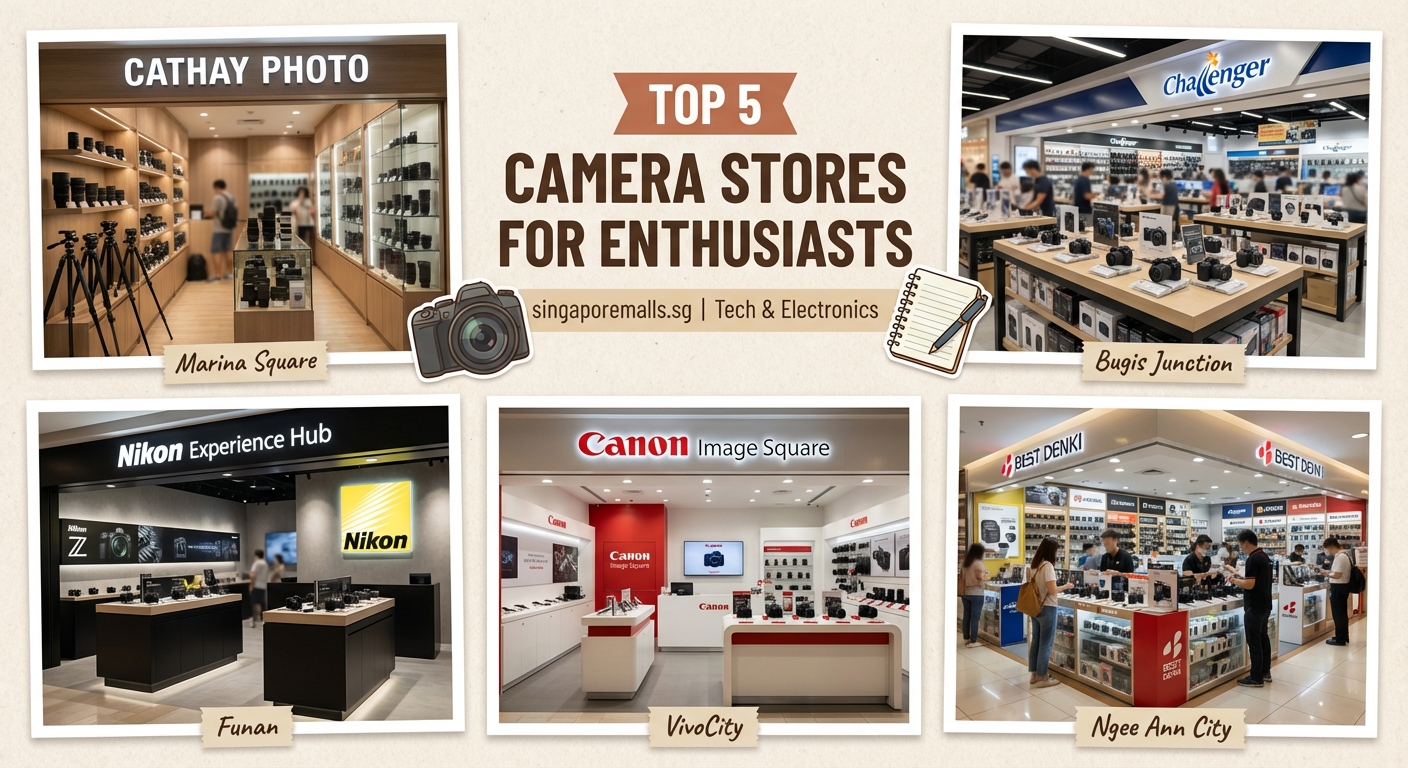
Alan Photo operates stores in multiple locations including Cathay Photo at Plaza Singapura and Marina Square. They stock Canon, Nikon, Sony, Fujifilm, and Olympus bodies plus a comprehensive lens selection.
Staff here know their products. They’ll let you test cameras with your own memory cards and won’t rush you through a decision.
Prices match online retailers most of the time. They run promotions during major sale periods and offer bundle deals that include memory cards, bags, and cleaning kits.
TK Foto
TK Foto in Peninsula Plaza specializes in second-hand equipment. Their inventory includes film cameras, vintage lenses, and discontinued digital models.
Every item gets inspected before sale. They rate condition honestly and price accordingly.
This shop suits photographers looking for character lenses or backup bodies. The staff can explain the quirks of older equipment and suggest compatible adapters.
Cathay Photo
Cathay Photo maintains a flagship store at Peninsula Shopping Centre and outlets in major malls. They’ve operated since 1956 and built relationships with every major camera brand.
Their strength lies in professional equipment. Medium format cameras, cinema lenses, and lighting systems fill the showroom alongside consumer gear.
Trade-in programs here offer fair value. Bring your old equipment for assessment and apply the credit toward new purchases.
John 3:16
This Peninsula Plaza institution focuses on film photography supplies. Fresh film stock, darkroom chemicals, and manual cameras line the shelves.
Prices for film remain competitive compared to online imports. They stock Kodak, Fujifilm, Ilford, and specialty brands.
The owner shoots film himself and can recommend stocks based on your subject matter and lighting conditions.
How to shop for camera equipment effectively
- Research your shortlist before visiting stores
- Bring your current lenses to test compatibility
- Visit during weekday mornings for better service
- Ask about bundle deals and price matching
- Test cameras with your own memory card
- Check warranty terms and service center locations
- Compare prices across three stores minimum
Start online but buy in person. Read reviews and watch comparison videos to narrow your choices to two or three models.
Bring existing lenses when shopping for camera bodies. Mount them on display units to check autofocus speed and image stabilization performance.
Weekday mornings between 10 AM and noon offer the best shopping experience. Staff have time to demonstrate features and answer detailed questions without weekend crowds.
Always test a camera with your own memory card. This confirms compatibility and lets you review images on your home computer before committing to a purchase.
What to know before buying camera gear
| Factor | Why It Matters | Common Mistake |
|---|---|---|
| Sensor size | Affects low-light performance and depth of field | Assuming more megapixels means better quality |
| Lens mount | Determines compatible lenses | Not checking if old lenses will fit new bodies |
| Weather sealing | Protects gear in humid Singapore climate | Skipping this feature to save money |
| Battery life | Critical for event and travel photography | Relying on manufacturer claims without real-world testing |
| Warranty coverage | Singapore warranties differ from parallel imports | Choosing grey market gear to save 10% |
Sensor size matters more than megapixel count. Full-frame sensors perform better in low light but cost significantly more. APS-C sensors offer excellent quality for most photography at lower prices.
Lens mount compatibility determines your long-term investment. Canon RF, Nikon Z, Sony E, and Fujifilm X mounts each have different lens ecosystems. Choose based on available glass, not just the camera body.
Singapore’s humidity demands weather-sealed equipment for outdoor shooting. Rain, sea spray, and condensation will damage unprotected cameras over time.
Battery life varies dramatically between models. Mirrorless cameras consume more power than DSLRs. Test actual shooting scenarios rather than trusting spec sheets.
Warranty terms separate authorized dealers from grey market sellers. Local warranties include service at Singapore centers. Parallel imports require shipping overseas for repairs.
Understanding pricing and promotions
Camera prices in Singapore stay competitive with online retailers. Physical stores match or beat web prices when you ask.
Major sales happen during:
- Great Singapore Sale (June to August)
- 11.11 Singles Day (November)
- Black Friday weekend (November)
- Year-end clearance (December)
Bundle deals often provide better value than discounts. A camera body packaged with a lens, memory card, and bag costs less than buying items separately.
Price matching policies exist at most authorized dealers. Show them a competitor’s quote and they’ll match or beat it by 5% to 10%.
Trade-in programs accept working equipment regardless of brand. Bring old cameras, lenses, and accessories for assessment. Credit applies immediately toward new purchases.
If you’re planning multiple purchases, the best mall membership programs can stack additional savings on top of store promotions.
Testing equipment before you buy
Never buy a camera without holding it first. Grip ergonomics affect shooting comfort during long sessions.
Check these points during testing:
- Menu navigation speed and logic
- Viewfinder clarity and refresh rate
- Autofocus accuracy in store lighting
- Weight balance with your preferred lens
- Button placement for your hand size
- Screen visibility in bright conditions
Bring a memory card and shoot test images. Review them on the store’s computer or your phone to check sharpness, color accuracy, and noise levels.
Test autofocus by shooting moving subjects. Ask staff to walk across the store while you track them through the viewfinder.
Weight matters more than specs suggest. A camera that feels light in the store gets heavy after three hours of shooting. Add your planned lens weight to the body before deciding.
Accessories worth buying with your camera
Essential accessories include:
- Extra batteries (two minimum for mirrorless cameras)
- Fast memory cards (UHS-II or better for 4K video)
- Screen protector (prevents scratches from keys and coins)
- Camera strap or wrist strap (match to your shooting style)
- Cleaning kit (air blower, microfiber cloths, lens pen)
- UV or clear filter (protects front lens element)
Skip the cheap bundled accessories. Third-party batteries from reputable brands like Wasabi Power work fine and cost half the price of originals.
Memory card speed affects burst shooting and video recording. Buy cards rated for your camera’s maximum write speed.
Straps matter more than most photographers realize. Peak Design, BlackRapid, and Capture Clip systems distribute weight better than stock straps.
Cleaning kits prevent sensor dust and lens smudges. Singapore’s humidity attracts dust and fungus growth on optical elements.
Where to get repairs and maintenance
Authorized service centers handle warranty repairs and paid maintenance. Each brand operates official centers in Singapore.
Canon has a service center at Peninsula Plaza. Nikon’s center sits in Alexandra Technopark. Sony maintains a facility at Jem mall.
Independent repair shops in Peninsula Plaza handle out-of-warranty fixes and vintage equipment. They charge less than official centers but may use third-party parts.
Sensor cleaning costs between $30 and $50 at official centers. Some camera shops offer free cleaning with equipment purchases.
Regular maintenance extends camera life. Get sensors cleaned every six months if you shoot outdoors frequently. Have shutter mechanisms checked after 100,000 actuations.
Film photography resources
Film photography continues growing in Singapore. Several shops stock fresh film and provide development services.
Triple D Minilab at Peninsula Plaza develops color and black-and-white film. Turnaround takes two to three days for standard processing.
Ruby Photo at North Bridge Centre offers same-day development for an additional fee. They also scan negatives to digital files.
Film prices vary by type:
- Color negative 35mm: $8 to $12 per roll
- Black and white 35mm: $10 to $15 per roll
- Slide film 35mm: $15 to $20 per roll
- 120 medium format: $12 to $25 per roll
Development costs range from $6 for basic color processing to $15 for push/pull processing with special handling.
Second-hand equipment considerations
Used camera gear offers excellent value if you know what to check. Shutter count indicates how much life remains in a camera body.
DSLRs typically last 150,000 to 300,000 actuations. Mirrorless cameras have electronic shutters that last longer.
Check for:
- Sensor dust and scratches (test with a white wall shot at f/16)
- LCD screen condition (look for scratches and dead pixels)
- Rubber grip wear (indicates heavy use)
- Mount condition (check for play or damage)
- Button responsiveness (test every control)
- Battery door fit (loose doors indicate drops)
Reputable second-hand dealers provide 30 to 90-day warranties. Private sellers rarely offer guarantees.
Price used equipment at 60% to 70% of current retail for recent models. Older gear depreciates faster but still delivers quality results.
Making sense of grey market versus authorized stock
Grey market cameras cost 10% to 15% less than authorized stock. They’re genuine products imported through unofficial channels.
The tradeoff involves warranty coverage. Grey market warranties require shipping to the original market country for service. Authorized stock gets serviced locally.
Some shops offer their own grey market warranties. These cover parts and labor but may have shorter terms than official warranties.
Grey market makes sense for:
- Backup bodies you can afford to replace
- Equipment you plan to upgrade within two years
- Photographers with technical repair skills
Stick with authorized stock for:
- Primary camera bodies
- Expensive telephoto lenses
- Professional equipment for paid work
When to buy new versus used equipment
New equipment suits photographers who need the latest features and full warranty protection. Current models include better autofocus, higher resolution, and improved video capabilities.
Used equipment works perfectly for photographers learning their craft. A three-year-old camera body delivers 90% of current performance at 50% of the price.
Buy new when:
- You shoot professionally and need reliability
- New models offer features you actually need
- You plan to keep equipment for five-plus years
- Warranty coverage matters for your workflow
Buy used when:
- You’re learning photography fundamentals
- You want to try a new camera system
- Budget constraints limit your options
- You prefer older ergonomics and controls
Specialty equipment and where to find it
Macro photography gear, underwater housings, and astronomy equipment require specialist retailers.
Cathay Photo stocks underwater housings for major camera brands. They also carry macro lenses and ring lights.
Telescope and astronomy shops like Orion Camera Center sell adapted camera equipment for astrophotography. They understand star trackers and intervalometers.
Drone cameras and gimbals appear at electronics stores like Challenger and Courts alongside traditional camera gear.
Your next camera purchase starts here
Walking into a camera shop beats clicking through websites every time. You’ll feel the weight, test the controls, and ask questions that reviews never answer. The best camera shops in Singapore understand this. They give you time, space, and knowledge to make decisions that last years. Start with one of the retailers above, bring your questions, and test everything before you buy.