
Hidden Gems at Bukit Timah Shopping Centre: Underrated Shops and Services Locals Use
Bukit Timah Shopping Centre sits quietly along Upper Bukit Timah Road, far from the glitzy malls that dominate tourist itineraries. This unassuming building houses decades-old businesses, family-run stalls, and specialists who’ve mastered their crafts through years of service. Locals know it as the place to find things you can’t get at chain stores, where shopkeepers remember your face and prices stay reasonable.
Bukit Timah Shopping Centre offers authentic, locally-owned shops and services that cater to residents rather than tourists. You’ll find specialty bookstores, traditional tailors, watch repair experts, music instrument shops, and affordable beauty salons. Most businesses have operated for over 20 years, building loyal customer bases through personalized service and fair pricing. The centre provides practical solutions for everyday needs without the markup of mainstream malls.
Specialty bookstores that still stock rare titles
Popular Bookstore occupies a modest corner on the second floor, packed floor to ceiling with titles you won’t find in major chains. The owner curates selections based on customer requests, keeping academic texts, local history books, and out-of-print editions that libraries have discarded.
Students preparing for university entrance exams come here for specialized study guides. Researchers hunting for publications from the 1980s and 1990s often succeed where online searches failed. The pricing stays competitive, with discounts offered on bulk purchases for schools and reading groups.
The staff knows their inventory without computer systems. Ask about a specific topic, and they’ll walk you to the exact shelf. They also accept special orders for titles not currently in stock, usually arriving within two weeks.
Traditional tailors who adjust and repair clothing
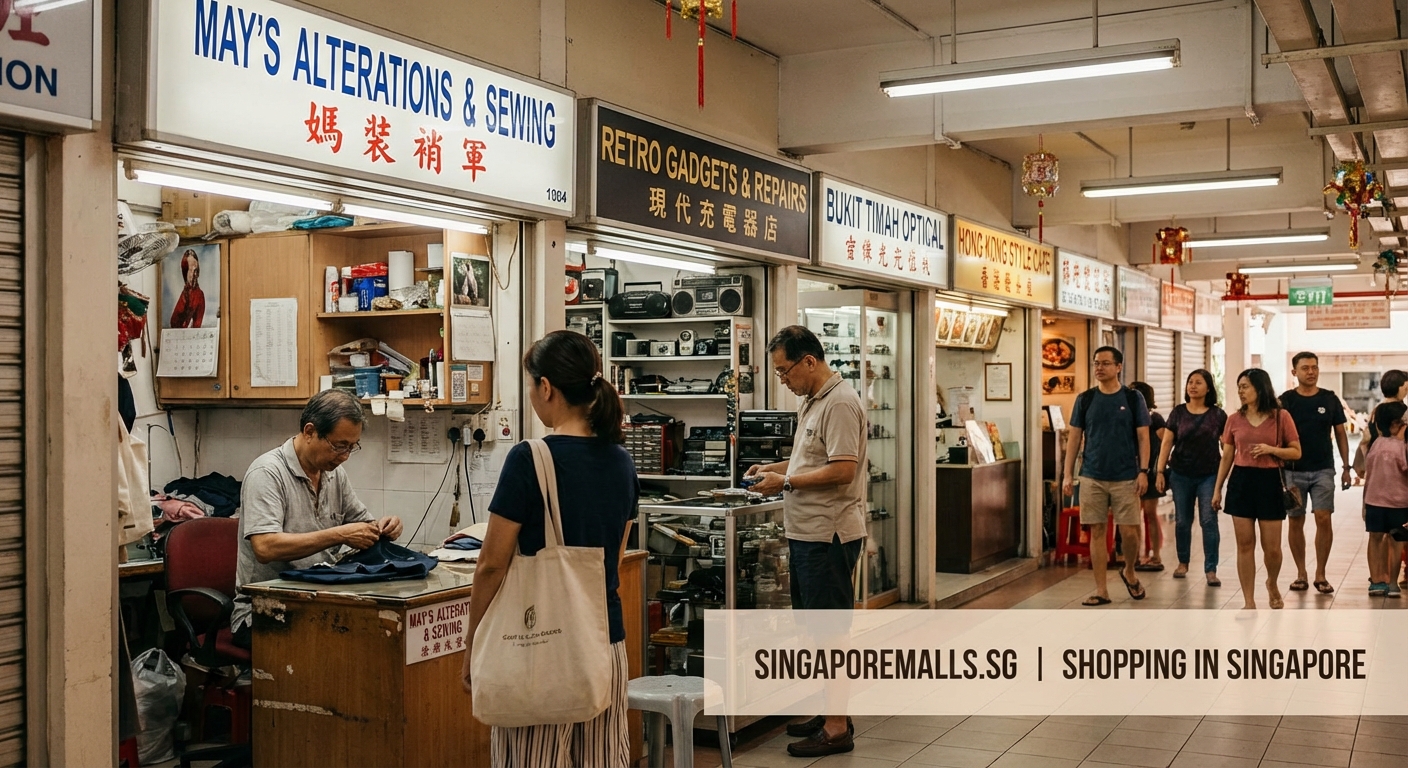
Several tailoring shops line the ground floor, run by seamstresses who learned their trade before fast fashion dominated wardrobes. These aren’t alteration counters in department stores. They handle complex repairs, pattern adjustments, and custom garments.
Bring in a vintage dress with a broken zipper, and they’ll source a matching replacement. Need pants hemmed by tomorrow for a wedding? They can accommodate rush jobs. Their rates remain reasonable because overhead costs stay low compared to budget-friendly shopping malls in Singapore that won’t break the bank.
One shop specializes in traditional wear for cultural events. Chinese cheongsams, Malay baju kurung, and Indian saris all receive expert attention. They understand fabric behavior, how silk drapes differently than cotton, and which stitches hold up through repeated washing.
Watch and clock repair specialists
A tiny shop near the main entrance repairs timepieces that most modern jewelers refuse to touch. The technician has worked with mechanical watches for over 30 years, handling everything from battery replacements to full movement overhauls.
Customers bring in inherited pocket watches, vintage Seikos, and Swiss automatics that stopped working decades ago. He disassembles each piece, cleans components in specialized solutions, and replaces worn parts with precision tools. The process takes time, but results often revive watches declared dead by other shops.
His pricing structure is transparent. He quotes before starting work and explains what needs fixing. No hidden fees, no pressure to upgrade. If a watch isn’t worth repairing, he’ll tell you honestly.
Music instrument shops for students and hobbyists
The third floor houses several music stores catering to learners and serious musicians alike. One shop focuses on guitars, with walls displaying acoustic and electric models across different price points. Another specializes in traditional Chinese instruments like erhus and guzheng.
Staff members play the instruments they sell. They’ll demonstrate techniques, recommend models based on your skill level, and adjust setups before you take them home. Rental programs help parents test whether their children will stick with lessons before committing to purchases.
Repair services handle broken strings, warped necks, and electronic issues. A violin shop maintains relationships with luthiers who can restore damaged instruments. They also stock accessories like rosin, tuners, and sheet music that mainstream retailers don’t carry.
Affordable beauty salons with experienced stylists
Several hair salons operate on the upper floors, offering services at prices that make affordable beauty services at Singapore shopping malls seem expensive by comparison. These aren’t trendy studios with Instagram-worthy interiors. They’re functional spaces where skill matters more than ambiance.
Stylists have decades of experience. They handle Asian hair textures expertly, understanding how different cutting techniques affect volume and shape. Perms, coloring, and treatments use quality products without the luxury markup.
Regular customers book the same stylist every visit, building relationships that allow for honest feedback. If a requested style won’t suit your face shape, they’ll say so and suggest alternatives. Walk-ins are welcome during weekday afternoons when appointment slots thin out.
Computer and electronics repair services
A cluster of repair shops on the second floor fixes laptops, phones, and tablets that warranty centers reject. Technicians diagnose hardware failures, replace components, and recover data from damaged devices.
They work on older models that manufacturers no longer support. Bring in a 10-year-old laptop, and they’ll upgrade the RAM, install a solid-state drive, and extend its usable life by several years. Costs stay reasonable because they source parts from various suppliers rather than insisting on original equipment.
Some shops also build custom desktop computers for gaming and professional work. They’ll discuss your needs, recommend components, and assemble systems tailored to specific tasks. This personalized approach contrasts with where to buy gaming laptops and PCs in Singapore malls, where sales staff push whatever models earn highest commissions.
Traditional medicine halls and herbalists
Ground floor shops sell Chinese herbs, dried ingredients, and traditional remedies. Practitioners trained in traditional Chinese medicine consult with customers, asking about symptoms and lifestyle before recommending treatments.
They prepare custom herbal mixes based on individual constitutions. Ingredients get weighed precisely, packaged in paper bags with brewing instructions. Some shops offer acupuncture and cupping services in private treatment rooms.
Prices reflect the cost of ingredients without excessive markup. Regular customers receive discounts and advice on preventive care. The herbalists also stock everyday items like ginseng, bird’s nest, and medicinal oils at competitive rates.
How to make the most of your visit
Planning your trip to Bukit Timah Shopping Centre requires a different approach than visiting mainstream malls. Here’s how to navigate effectively:
- Visit on weekday mornings when shops are less crowded and staff have more time for consultations.
- Bring cash, as many smaller shops don’t accept cards or charge fees for electronic payments.
- Ask questions freely since shopkeepers genuinely want to help rather than rush transactions.
- Request business cards or contact numbers for shops you like, as some close irregularly for holidays or family events.
- Allow extra time for services like repairs or alterations, which can’t be rushed without compromising quality.
Common mistakes to avoid
| Mistake | Why It Matters | Better Approach |
|---|---|---|
| Expecting instant service | Craftspeople work methodically | Call ahead to check turnaround times |
| Comparing prices to chain stores | Different business models and overhead costs | Evaluate value based on expertise and personalization |
| Assuming shops are outdated | Many have modernized while keeping personal touch | Give unfamiliar shops a chance before judging |
| Visiting only once | Relationships build trust and better service | Return to shops where you had good experiences |
| Ignoring cash-only signs | ATMs are limited in the building | Withdraw money before arriving |
A long-time customer of the watch repair shop shared this advice: “Don’t expect Amazon-speed service here. The technician works on one watch at a time, giving each piece the attention it deserves. I’ve had watches repaired in three days that other shops quoted three weeks for. The difference is skill, not speed.”
Food options worth trying
The basement food court serves hawker-style meals at prices lower than most food courts in newer developments. Stalls have operated for years, perfecting recipes that keep regulars coming back weekly.
One stall makes chicken rice with perfectly poached meat and fragrant rice cooked in chicken stock. Another serves laksa with a rich coconut broth that balances spice and creaminess. Portions are generous, and most dishes cost under $5.
A traditional bakery sells kaya puffs, curry puffs, and Swiss rolls that taste like childhood memories. They bake fresh batches throughout the day, so items are rarely stale. The egg tarts have flaky crusts and smooth custard centers that rival expensive cafes.
For those interested in other shopping malls in Singapore with the best food courts and hawker centers, Bukit Timah Shopping Centre represents the authentic, no-frills approach that prioritizes taste over presentation.
Parking and accessibility tips
The building offers limited parking spaces that fill during peak hours. Weekday afternoons between 2 PM and 5 PM provide the best chances of finding spots. Weekend mornings require patience or alternative transport.
Bus services connect to nearby MRT stations, with routes 67, 171, and 174 stopping directly outside. The journey from Beauty World MRT takes about 10 minutes by bus.
Accessibility features include ramps at main entrances and an elevator serving all floors. The elevator is older and slower than modern systems, so factor in extra time if mobility is a concern.
Building relationships with shopkeepers
The real value of Bukit Timah Shopping Centre emerges through repeated visits. Shopkeepers remember regular customers, offering advice, discounts, and priority service.
A customer who bought guitar strings monthly for two years received a call when a limited-edition model arrived, before it went on general display. Another regular at the tailor shop gets rush alterations accommodated without extra charges because she’s referred multiple friends.
These relationships can’t be replicated at chain stores where staff turnover constantly. The continuity of family-run businesses creates communities rather than transactions.
Why locals choose this centre over mainstream options
Residents appreciate the absence of aggressive marketing and sales tactics. No one pressures you to buy extended warranties or sign up for membership programs. Prices are stated clearly, negotiations happen respectfully, and returns are handled fairly.
The variety of specialized services under one roof saves time. You can get a haircut, repair a watch, buy sheet music, and pick up dinner without driving to multiple locations. This convenience matters when managing busy schedules around work and family commitments.
Quality remains consistent because businesses depend on reputation rather than foot traffic. A bad review spreads through the neighborhood faster than online ratings, so maintaining standards becomes essential for survival.
Services you didn’t know existed here
Beyond the obvious shops, several niche services operate quietly:
- A locksmith who cuts keys for older locks that hardware stores can’t handle
- A shoe repair specialist who restores leather boots and replaces worn soles
- A framing shop that mounts certificates, artwork, and memorabilia with archival materials
- A stamp and coin dealer for collectors seeking specific issues
- A pet grooming service in the basement for small dogs and cats
These businesses survive because they serve specific needs that mass-market retailers ignore. Finding them requires walking through the building and reading signs carefully, as they don’t advertise heavily.
What makes this shopping centre different
Bukit Timah Shopping Centre operates on principles that seem outdated in Singapore’s retail landscape. No flashy renovations, no celebrity endorsements, no social media campaigns. Just skilled people providing services that communities actually need.
The building shows its age through worn tiles and dated decor, but functionality trumps aesthetics. Shops maximize space efficiently, displaying inventory accessibly rather than creating Instagram-worthy displays.
This authenticity attracts residents tired of manufactured experiences. You won’t find artisanal coffee at $8 per cup or boutiques selling mass-produced items labeled as handcrafted. Everything here serves practical purposes at honest prices.
Planning your first visit
Start by identifying specific needs rather than browsing aimlessly. The centre rewards purposeful visits more than casual shopping trips. Need a watch battery replaced? Head to the repair shop. Looking for music books? Go straight to the instrument stores.
Dress casually and comfortably. Air conditioning exists but doesn’t match the arctic blast of air-conditioned walking routes between connected malls in Singapore. Wear shoes suitable for walking, as you’ll cover multiple floors.
Bring a list if you’re shopping for specific items. The variety can be overwhelming, and having clear objectives helps you stay focused. That said, leave room for discoveries. You might stumble upon a shop that solves a problem you didn’t know had a solution.
Understanding the customer base
The people shopping here reflect the neighborhood’s demographics. Families with school-age children buying instruments and books. Retirees getting alterations and repairs done. Young professionals seeking affordable services without sacrificing quality.
You’ll notice fewer tourists and more conversations in multiple languages. Shopkeepers often speak Mandarin, Malay, and English fluently, switching between languages naturally as customers require.
This diversity creates an atmosphere that feels distinctly Singaporean, representing the multicultural reality of daily life rather than the sanitized version presented in tourist brochures.
When to visit for specific services
Different shops keep varying hours, so timing matters:
- Tailors work best on weekday mornings when they can take measurements carefully
- Music shops have more staff on weekends to handle student traffic
- Repair services often close on Mondays or alternate days
- Beauty salons accept walk-ins most easily on Tuesday through Thursday afternoons
- Food stalls prepare fresh batches during lunch and dinner rushes
Calling ahead prevents wasted trips, especially for specialized services that require appointments or specific expertise.
Why these businesses survive in modern Singapore
Rent at Bukit Timah Shopping Centre costs significantly less than prime retail spaces in Orchard Road or Marina Bay. This affordability allows businesses to charge fair prices while maintaining profitability.
Customer loyalty provides steady income that doesn’t depend on tourist seasons or economic cycles. Regular clients return regardless of market conditions because they value the relationships and expertise.
Low overhead also means businesses can weather slow periods that would bankrupt stores in expensive locations. They don’t need to hit aggressive sales targets monthly, allowing them to focus on service quality over volume.
Making the most of your time here
Treat your visit as an opportunity to slow down and engage with people who care about their crafts. Ask the watch repairman how mechanical movements work. Request the tailor’s opinion on fabric choices. Listen when the herbalist explains ingredient properties.
These conversations provide value beyond transactions. You’ll learn about craftsmanship, cultural traditions, and practical knowledge that disappears as skilled practitioners retire without passing on expertise.
The centre won’t dazzle you with architectural grandeur or entertainment options. It offers something increasingly rare: authentic human connections centered around useful skills and honest service.
Finding value in unexpected places
Bukit Timah Shopping Centre proves that the best discoveries often hide in plain sight. While tourists flock to luxury shopping in Singapore, locals know that real value comes from businesses built on trust, skill, and fair dealing.
The next time you need a repair, a specialty item, or a service that chains don’t offer, skip the glossy malls. Head to this unassuming building where shopkeepers still remember your name, prices stay reasonable, and quality matters more than marketing. You’ll find solutions to problems you didn’t know could be solved, often for less than you expected to pay.