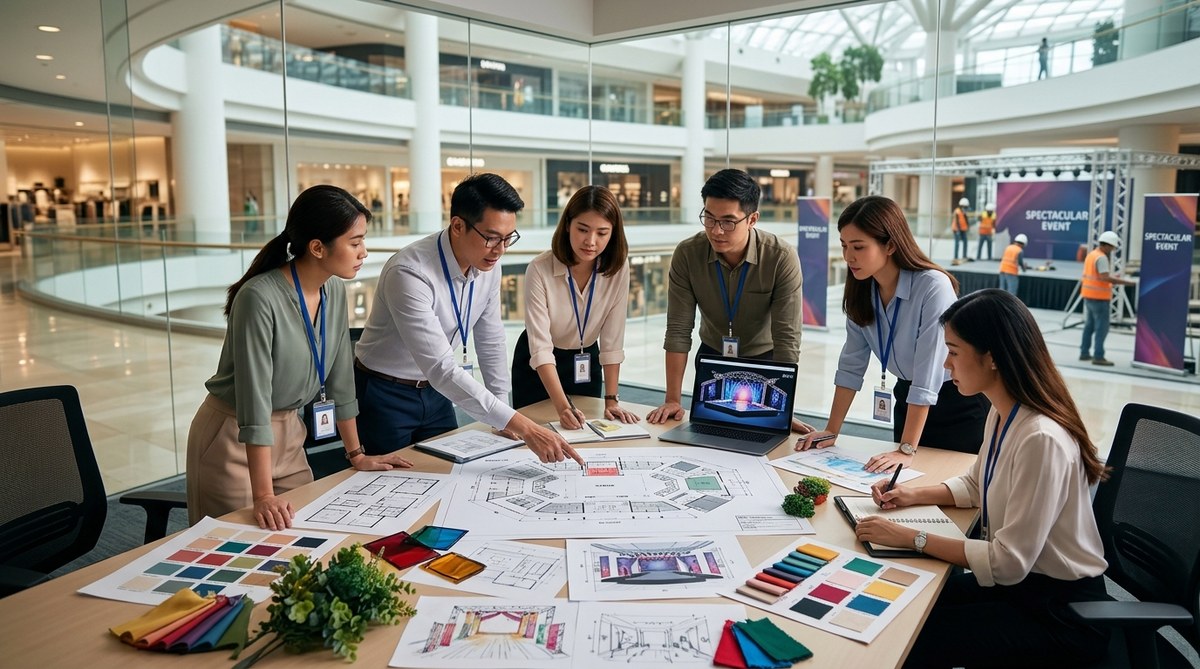

Behind the Scenes: How Singapore Malls Plan Their Most Spectacular Events
Walking through ION Orchard during Chinese New Year, you see towering floral installations, synchronized light shows, and pop-up performances that seem effortless. But behind each spectacular activation sits months of planning, cross-team coordination, and strategic decision-making that most shoppers never see.
Singapore malls typically begin planning major events six to twelve months in advance, coordinating between property management, marketing teams, retail tenants, and external vendors. Successful activations balance foot traffic goals, tenant participation, budget constraints, and seasonal calendars while maintaining safety standards and brand identity. Understanding this process helps event professionals benchmark their work and consumers appreciate the complexity behind seemingly simple mall displays.
The planning timeline starts earlier than you think
Most major mall events begin taking shape six to twelve months before opening day.
Marketing teams at properties like VivoCity or Raffles City start by reviewing the previous year’s performance data. They analyze foot traffic patterns, spending behavior, social media engagement, and tenant feedback to identify what worked and what flopped.
Around the nine-month mark, concept presentations begin. Creative agencies pitch themes that align with upcoming festivals, shopping seasons, or cultural moments. Teams evaluate each concept against budget constraints, space limitations, and brand positioning.
By six months out, the winning concept gets greenlit. Detailed planning begins immediately.
Here’s what happens during those crucial six months:
- Detailed floor plans and installation designs get finalized
- Vendor contracts are negotiated and signed
- Safety assessments and regulatory approvals are secured
- Marketing collateral production begins
- Tenant briefings and partnership discussions start
- Contingency plans for weather or technical failures get drafted
The timeline compresses for smaller activations. Weekend pop-ups or promotional booths might only need six to eight weeks of preparation. But tentpole events like Christmas displays or anniversary celebrations demand that full six-month runway.
Budget allocation follows strategic priorities
Mall event budgets in Singapore typically range from $50,000 for modest activations to over $1 million for major seasonal installations.
The money gets divided across several categories:
- Physical installations and decorations (35-45% of total budget)
- Marketing and advertising (20-30%)
- Talent and entertainment (10-20%)
- Permits, insurance, and safety measures (5-10%)
- Contingency reserves (10-15%)
Premium properties like luxury shopping destinations allocate more toward high-end materials and exclusive brand partnerships. Family-oriented centers invest heavily in interactive elements and child-safe installations.
Management teams constantly balance three competing goals: creating Instagram-worthy moments that drive social sharing, generating measurable foot traffic increases, and supporting tenant sales during the activation period.
Smart malls build in revenue opportunities that offset costs. Sponsorship deals with brands, paid participation from tenants, and exclusive vendor partnerships can recover 20-40% of event expenses.
“The best mall events don’t just look good. They create multiple revenue streams while delivering measurable traffic and spending increases. If you can’t track the ROI, you’re just throwing a party.” – Senior Marketing Director, Major Singapore Property Group
Vendor selection involves rigorous vetting
Singapore’s mall management companies maintain approved vendor lists built over years of relationship-building.
For major events, the selection process typically involves:
- Request for proposals (RFP) sent to three to five qualified vendors
- Detailed presentations reviewing creative concepts, technical capabilities, and past work
- Site visits to review previous installations
- Reference checks with other property managers
- Budget negotiations and contract finalization
Vendors need specific certifications and insurance coverage to work in Singapore malls. Fire safety compliance, electrical safety certificates, and public liability insurance are non-negotiable requirements.
Experienced vendors understand the unique challenges of mall environments. They design installations that withstand constant foot traffic, maintain visual appeal under harsh lighting, and can be assembled during limited overnight installation windows.
First-time vendors often underestimate setup complexity. A seemingly simple photo backdrop might require structural engineering assessments, fire-retardant material certifications, and accessibility compliance reviews before installation approval.
Coordination between stakeholders requires constant communication
A typical mall event involves coordination between:
- Property management teams
- Marketing and events staff
- Security personnel
- Facilities and maintenance crews
- Individual retail tenants
- External vendors and contractors
- Regulatory authorities
Weekly coordination meetings begin about two months before launch. These sessions review progress, address concerns, and adjust timelines as needed.
Tenant communication deserves special attention. Retail stores near event installations need advance notice about setup schedules, potential noise disruption, and changes to customer flow patterns. Smart mall teams turn nearby tenants into partners by offering co-marketing opportunities or preferential positioning in event promotions.
Security teams review crowd management plans and emergency procedures. They identify potential bottlenecks, plan for peak traffic periods, and establish protocols for medical emergencies or equipment failures.
Facilities teams coordinate utility needs, waste management during setup, and post-event cleanup. They ensure installations don’t block fire exits, obstruct accessibility routes, or interfere with essential building systems.
This coordination intensifies during the final two weeks before launch, with daily check-ins becoming standard practice.
Installation windows are tightly controlled
Most mall installations happen overnight to minimize disruption to shoppers and tenants.
Setup crews typically work between 10 PM and 6 AM. This compressed timeline demands meticulous planning and experienced teams who can work efficiently under pressure.
Large-scale installations might require multiple overnight sessions. A major Christmas display could need five to seven nights of setup work, with each night’s progress carefully sequenced to maintain mall operations during business hours.
Malls enforce strict noise limits during overnight work. Power tools, heavy machinery, and loud construction activities get scheduled for the earliest hours when residential neighbors are least likely to complain.
Weather creates additional complications for properties with outdoor atriums or open-air sections. Rain delays can cascade through the entire installation schedule, forcing teams to work faster or add extra setup nights.
Quality control inspections happen before the mall opens each morning. Management teams review completed work, identify any issues, and ensure installations are safe and photo-ready before customers arrive.
Marketing campaigns launch in coordinated waves
Event promotion follows a carefully orchestrated timeline designed to build anticipation without causing fatigue.
The typical marketing rollout looks like this:
| Timeline | Marketing Activity | Primary Goal |
|---|---|---|
| 4-6 weeks before | Teaser content on social media | Build curiosity and awareness |
| 3-4 weeks before | Full announcement with event details | Drive calendar saves and early planning |
| 2-3 weeks before | Influencer partnerships and media coverage | Expand reach beyond regular audience |
| 1 week before | Daily countdown content and behind-the-scenes glimpses | Maintain engagement momentum |
| Launch week | Live coverage, user-generated content campaigns | Maximize attendance and social sharing |
| Post-event | Highlight reels and thank-you content | Sustain engagement for future events |
Digital channels dominate modern mall marketing. Instagram, TikTok, and Facebook drive the majority of event awareness, particularly among younger shoppers who make up the core audience for many activations.
Email marketing to loyalty program members provides direct communication with frequent visitors. These campaigns often include exclusive previews, early access opportunities, or special perks that reward regular customers.
Traditional channels still matter. Banners in connected mall corridors and posters near MRT stations capture commuters who might not follow social media accounts.
Malls increasingly partner with retail tenants on co-marketing efforts. A fashion event might involve clothing stores offering exclusive discounts to event attendees, creating mutual benefit and shared promotion costs.
Safety and regulatory compliance drive major decisions
Singapore’s strict safety regulations shape every aspect of mall event planning.
Fire safety requirements are particularly stringent. All materials used in installations must carry fire-retardant certifications. Decorative elements can’t block sprinklers, smoke detectors, or emergency lighting. Exit paths must remain clear with minimum width requirements strictly enforced.
Electrical installations require licensed contractors and inspection certificates. Temporary power distribution systems need proper grounding, circuit protection, and load calculations verified by qualified engineers.
Crowd capacity limits get calculated based on space dimensions, exit availability, and emergency egress requirements. Popular events might need timed entry slots or queue management systems to prevent overcrowding.
Insurance coverage extends beyond basic liability. Event-specific policies cover equipment damage, third-party injuries, cancellation costs, and weather-related losses. Premium properties often require vendors to carry substantial coverage limits.
Accessibility compliance ensures events welcome visitors with mobility challenges, visual impairments, or other disabilities. Ramps, tactile paths, and clear signage are mandatory, not optional considerations.
Food and beverage activations face additional health department regulations. Temporary food stalls need proper refrigeration, hand-washing facilities, and waste disposal systems that meet stringent hygiene standards.
Technology integration enhances modern activations
Contemporary mall events increasingly incorporate digital elements that extend beyond physical installations.
Augmented reality experiences let shoppers interact with virtual elements through their smartphones. A Chinese New Year display might include AR filters that add animated decorations to selfies, encouraging social media sharing.
Interactive displays with touch screens or motion sensors create engaging experiences that hold attention longer than static decorations. These installations also collect valuable data about visitor engagement and preferences.
Social media integration happens through branded hashtags, photo contest mechanics, and real-time content feeds displayed on large screens. Malls track hashtag usage to measure organic reach and identify influential participants worth engaging for future events.
QR codes scattered throughout installations link to exclusive content, discount offers, or gamification elements. Shoppers who scan multiple codes might unlock special rewards, encouraging thorough exploration of the entire activation.
Digital payment integration streamlines transactions at pop-up vendors or special retail activations. Contactless payment options and e-wallet compatibility have become standard expectations rather than premium features.
Common mistakes that derail mall events
Even experienced teams make planning errors that compromise event success.
| Mistake | Impact | Prevention Strategy |
|---|---|---|
| Underestimating setup time | Rushed installation, quality compromises | Add 20% buffer to vendor time estimates |
| Ignoring peak traffic patterns | Overcrowding, safety concerns | Review historical data and plan capacity limits |
| Poor tenant communication | Complaints, lack of participation | Start briefings early and maintain regular updates |
| Inadequate contingency planning | Crisis scrambling when issues arise | Document backup plans for top five risk scenarios |
| Neglecting post-event analysis | Repeated mistakes, missed improvement opportunities | Schedule debrief within one week of event close |
Budget overruns plague projects that don’t account for hidden costs. Last-minute design changes, extended installation time, or unexpected regulatory requirements can quickly consume contingency reserves.
Weather contingencies often get overlooked until rain threatens an outdoor component. Smart teams have backup dates, alternative indoor locations, or weatherproof design modifications ready before setup begins.
Technical failures during high-profile moments create embarrassing situations that damage reputation. Redundant systems, backup power supplies, and on-site technical support minimize these risks.
Visitor feedback mechanisms help identify issues before they escalate. Simple comment cards, digital surveys, or social media monitoring reveal problems that management teams can address mid-event.
Seasonal calendars drive strategic event planning
Singapore malls operate on a predictable annual calendar that shapes event strategies.
Chinese New Year dominates the January-February period, with elaborate decorations and cultural performances attracting massive crowds. Properties compete to create the most impressive installations, knowing families will visit multiple malls to compare displays.
Mid-year sales in June and July focus on promotional events rather than decorative installations. The emphasis shifts to value messaging, extended hours, and exclusive tenant offers.
Back-to-school campaigns in late November and December target parents preparing for the new academic year. These activations blend shopping incentives with family-friendly entertainment.
Christmas and year-end celebrations from mid-November through early January represent the peak event season. Malls invest their largest budgets during this period, knowing consumer spending reaches annual highs.
National Day celebrations in August offer opportunities for patriotic themes and community-focused programming. These events often incorporate local artists, cultural performances, and Singapore-themed installations.
Strategic malls also create their own signature events outside the major festival calendar. Anniversary celebrations, exclusive brand launches, or unique seasonal activations help differentiate properties and create year-round engagement.
Data measurement determines future investment
Modern mall management relies heavily on metrics to evaluate event success and guide future planning.
Foot traffic measurement happens through multiple methods. Entrance counters track total visitors, while heat mapping technology reveals how people move through event spaces and which installations attract the most attention.
Dwell time analysis shows how long visitors spend at specific installations. Longer dwell times generally correlate with higher engagement and increased likelihood of nearby tenant visits.
Sales data from participating tenants provides the most direct ROI measurement. Successful events should drive measurable increases in transaction volume and average basket size during the activation period.
Social media metrics track reach, engagement, and sentiment. Hashtag usage, tagged photos, and organic mentions reveal how effectively events generate buzz beyond the physical space.
Loyalty program data links event attendance to repeat visits and long-term value. The best activations don’t just drive one-time traffic but encourage ongoing engagement with the property.
Survey feedback provides qualitative insights that numbers alone can’t capture. Post-event questionnaires reveal what visitors loved, what disappointed, and what they’d like to see in future activations.
This data feeds directly into planning for subsequent events, creating a continuous improvement cycle that refines strategies over time.
Putting event planning knowledge into practice
Understanding how Singapore malls plan events reveals the complexity behind seemingly simple activations.
Whether you’re an event professional benchmarking your own work, a retail manager preparing for upcoming mall programs, or simply a curious shopper who appreciates the effort behind those Instagram-worthy displays, this behind-the-scenes perspective changes how you experience shopping center events.
The next time you walk through an elaborate mall installation, notice the details that reveal careful planning. The fire safety clearances around decorations. The strategic placement that guides foot traffic past key tenants. The social media prompts encouraging you to share photos. Each element serves a purpose in a carefully orchestrated strategy designed to create memorable experiences while driving measurable business results.
Great mall events don’t happen by accident. They’re the result of months of strategic planning, cross-functional coordination, and attention to countless details that most visitors never notice but everyone subconsciously appreciates.