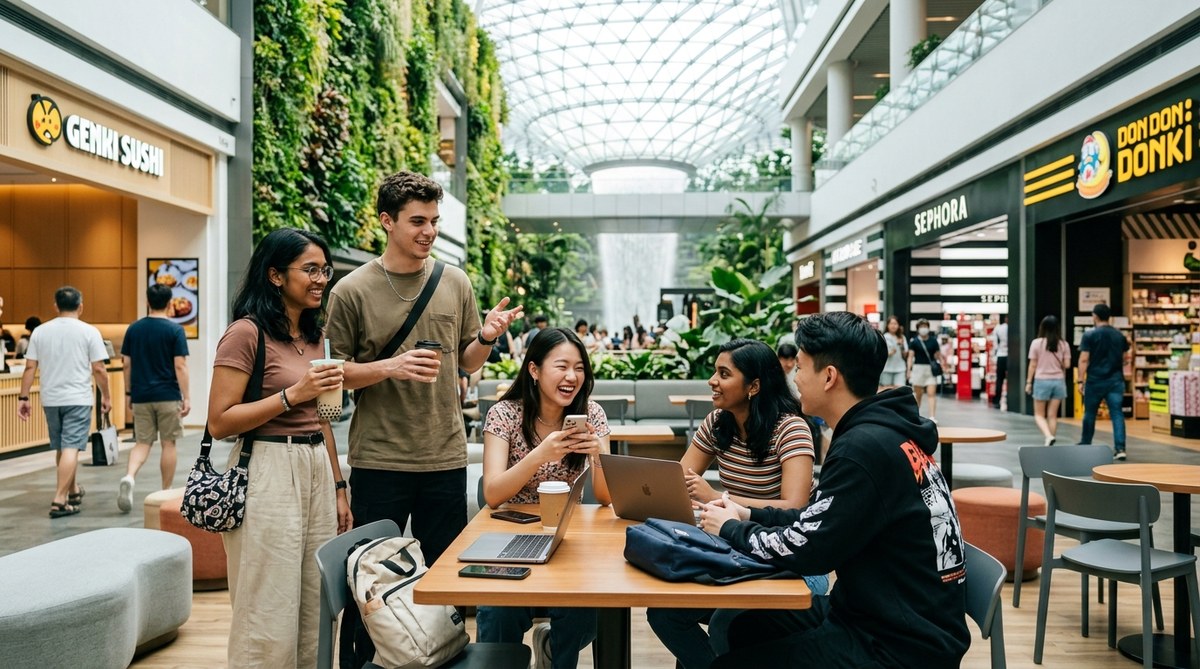

Why Singapore Malls Are Becoming the New Hangout Spots for Gen Z
Singapore’s shopping centers have transformed from retail destinations into vibrant social ecosystems where Gen Z gathers, connects, and creates memories. Walk into any major mall on a weekend afternoon and you’ll notice clusters of young people camped out at cafes, filming content in Instagrammable corners, or browsing pop-up stores that didn’t exist six months ago. This shift represents a fundamental change in how the youngest generation views public spaces.
Singapore malls have evolved into Gen Z social hubs due to free WiFi, air-conditioning, aesthetic spaces, diverse food options, and experiential retail. Young people now spend 3-5 hours per visit not shopping, but socializing, creating content, and enjoying entertainment. Malls offer safe, accessible, and Instagram-worthy environments that traditional hangout spots can’t match, making them the new community centers for digital natives.
Why Gen Z chooses malls over traditional hangout spots
The preference isn’t random or superficial.
Gen Z gravitates toward malls because they solve multiple problems at once. Climate control matters in Singapore’s tropical heat. Safety concerns disappear in well-monitored public spaces. Parents approve of mall hangouts more readily than outdoor locations or private venues.
Cost plays a massive role too. Unlike cafes that expect continuous purchases or entertainment venues with entrance fees, malls allow extended stays without constant spending. You can window shop for hours, sit in common areas, or rotate between free activities without anyone questioning your presence.
The social infrastructure makes a difference. Malls provide charging stations, clean restrooms, and comfortable seating that outdoor spaces simply can’t offer. When you’re meeting five friends from different parts of Singapore, navigating connected malls beats coordinating at a park or street corner.
“We used to hang out at void decks or fast food joints, but malls just have everything. You can study, eat, shop, take photos, and watch movies all in one place without dealing with the weather.” – Rachel, 19, polytechnic student
The aesthetic factor that drives repeat visits
Instagram culture has reshaped mall design.
Developers now incorporate photo-worthy installations, artistic facades, and visually striking common areas. Gen Z doesn’t just visit these spaces; they document and share them. A single viral post can transform an unknown corner into a must-visit destination.
Jewel Changi Airport exemplifies this trend perfectly. The indoor waterfall isn’t just architecture; it’s a backdrop for thousands of social media posts. Young visitors plan entire outfits around their Jewel photo sessions.
Seasonal decorations amplify this effect. Christmas installations, Lunar New Year displays, and themed pop-ups create rotating content opportunities. Gen Z returns frequently to capture new backdrops, turning mall visits into ongoing creative projects.
The lighting matters more than you’d expect. Modern malls invest in flattering ambient lighting that makes smartphone photos look professional without editing. Natural light wells, strategic spotlights, and color-temperature-controlled spaces all contribute to the appeal.
Food culture as the social anchor
Eating together remains central to Gen Z socialization.
But the approach differs from previous generations. Instead of formal restaurant dinners, young people prefer grazing through food courts and diverse dining options that let everyone choose their preference without group consensus.
The variety solves dietary restrictions and preferences effortlessly. Halal, vegetarian, vegan, and allergy-friendly options coexist in most food courts. No one feels excluded or forces the group to compromise on restaurant choice.
Price flexibility matters too. Budget-friendly dining options let students on allowances hang out with working friends without financial awkwardness. You can spend $5 or $50 in the same food hall without judgment.
Hidden gem cafes offer quieter alternatives when groups want extended conversations. These spaces understand Gen Z’s needs: laptop-friendly policies, strong WiFi, and tolerance for long stays over single drink orders.
Entertainment options beyond shopping
Retail takes a backseat to experience.
Modern malls pack entertainment density that matches Gen Z’s short attention spans and variety-seeking behavior. A typical afternoon might include:
- Browsing pop-up markets featuring local creators and small businesses
- Testing products at interactive beauty or tech stores
- Catching a movie at premium cinemas with reclining seats
- Playing arcade games or trying VR experiences
- Attending free events, performances, or product launches
Karaoke lounges and entertainment venues create private spaces within public settings. Groups can rent rooms for a few hours, maintaining privacy while staying in the mall ecosystem.
Arcade options have evolved beyond traditional games. Modern installations feature photo booths, claw machines with trendy prizes, and rhythm games that double as social media content.
The programming schedule matters. Malls host events almost weekly: meet-and-greets with influencers, product launches, art installations, and seasonal festivals. Gen Z treats these like appointment viewing, planning visits around specific happenings.
The study and work-friendly environment
Malls have become unofficial co-working spaces.
Students camp out during exam periods, spreading textbooks across food court tables. The environment offers advantages over libraries: food access, social breaks, and ambient noise that some find more conducive to focus than silence.
Free WiFi and charging stations remove technical barriers. Unlike cafes that might restrict usage, mall common areas welcome extended stays. You’ll see groups alternating between study sessions and snack runs throughout afternoons.
The social aspect reduces isolation. Studying alone at home feels lonely; studying alone in a bustling mall maintains connection to the outside world. Quick breaks for people-watching or short walks provide mental resets without leaving the premises.
Working professionals use malls similarly. Late-night mall options accommodate flexible schedules, letting freelancers or shift workers maintain productive routines outside traditional office hours.
How malls adapt to Gen Z preferences
Management teams actively court younger demographics.
Tenant mix reflects Gen Z interests: streetwear boutiques, K-pop merchandise stores, sustainable fashion brands, and tech retailers. Korean beauty stores proliferate because they align with current beauty trends.
Marketing strategies speak Gen Z’s language. Malls maintain active social media presence, collaborate with influencers, and create hashtag campaigns. Loyalty programs integrate with mobile apps, offering gamified rewards that appeal to digital natives.
Event programming targets specific interests:
- Gaming tournaments and esports viewing parties
- Sustainable fashion swaps and thrift markets
- Art installations by local creators
- Wellness workshops and fitness classes
- Food festivals featuring viral trends
The feedback loop works both ways. Malls monitor social media to identify trending spots within their premises, then enhance those areas with better lighting, seating, or decorative elements.
Comparing mall types and their Gen Z appeal
Not all malls attract Gen Z equally.
| Mall Type | Gen Z Appeal | Primary Draw | Typical Activities |
|---|---|---|---|
| Orchard Road flagships | High | Premium brands, events | Window shopping, photo ops, people-watching |
| Heartland malls | Very High | Accessibility, affordability | Study sessions, casual dining, daily hangouts |
| Lifestyle malls | High | Unique tenants, aesthetics | Boutique browsing, cafe hopping, content creation |
| Tourist-focused | Medium | Attractions, novelty | Special occasion visits, showing visitors around |
Orchard Road’s shopping malls offer prestige and variety but can feel expensive for regular visits. Gen Z uses these for special occasions or when impressing out-of-town friends.
Heartland malls win for frequency. Proximity to home, familiar faces, and comfortable pricing make them default choices for weeknight hangouts. These spaces feel like extended living rooms for neighborhood youth.
The best Gen Z strategy involves mixing mall types based on purpose. Study sessions happen at quiet heartland spots. Weekend social events gravitate toward Orchard or lifestyle malls with better Instagram potential.
The role of technology and connectivity
Digital integration defines the experience.
Gen Z expects seamless connectivity throughout mall visits. Strong WiFi enables content upload, navigation app usage, and constant communication with friends. Weak connectivity can make an otherwise perfect mall feel obsolete.
Mobile payment adoption runs high among young shoppers. Malls that support multiple payment platforms (PayNow, GrabPay, credit cards, etc.) remove friction from spontaneous purchases. Stacking credit card promotions with mall discounts has become a sport for savvy Gen Z shoppers.
Navigation apps help groups coordinate meeting points in massive complexes. “Meet at the fountain” doesn’t work when malls span multiple buildings. Pin drops and real-time location sharing solve coordination problems that frustrated previous generations.
Digital directories and interactive maps replace static signage. Gen Z prefers searching for stores on their phones rather than studying wall-mounted directories. Malls that digitize this experience align with natural behavior patterns.
Social dynamics and group behavior patterns
Mall hangouts follow specific social scripts.
Groups typically arrive in waves rather than all at once. Early arrivals claim territory at popular spots, then others join gradually. This fluid assembly works better in malls than restaurants with reservation systems.
The group size flexibility matters. Mall hangouts accommodate anywhere from two to twenty people without advance planning. Try that at a restaurant or entertainment venue.
Activity rotation keeps things interesting:
- Start with food court lunch
- Browse stores together or split up
- Regroup at a cafe for extended sitting
- Catch a movie or play arcade games
- End with dessert or bubble tea
The non-committal nature appeals to Gen Z social styles. Plans can change mid-visit without penalties. If someone wants to leave early or others want to extend the hangout, the mall setting accommodates both.
Gender dynamics shift in mall settings too. Mixed-gender groups find malls more socially acceptable than private venues. Parents trust mall hangouts more than house visits or outdoor locations.
Economic factors driving the trend
Financial accessibility removes participation barriers.
Unlike activities requiring entrance fees or minimum spending, malls welcome everyone regardless of budget. You can participate fully in the social experience while spending nothing, something impossible at most entertainment venues.
The comparison reveals stark differences:
- Movie: $13-20 per person minimum
- Bowling: $15-25 per person plus shoe rental
- Cafe: $8-15 per drink with implied purchase pressure
- Mall: $0 entry, optional spending
Budget-friendly malls specifically cater to price-conscious youth. These spaces understand their demographic and price accordingly, making regular visits financially sustainable.
Part-time employment opportunities within malls create additional connection. Gen Z workers spend breaks exploring the premises, then return as customers on days off. The familiarity breeds loyalty.
Membership programs offer rewards that matter to young shoppers: birthday vouchers, exclusive previews, and points systems that actually accumulate to useful amounts.
Safety and parental approval factors
Supervised freedom appeals to both generations.
Parents feel comfortable with mall hangouts because security presence, CCTV coverage, and public visibility provide safety without direct supervision. This matters significantly for younger Gen Z members still navigating independence.
The controlled environment reduces risk exposure. Unlike parks or beaches where accidents or unwanted interactions might occur, malls offer predictable, managed spaces. Medical facilities, security personnel, and information counters provide safety nets.
Transportation accessibility strengthens parental approval. Most major malls connect to MRT stations or bus interchanges. Parents can drop off or pick up easily, and teenagers can travel independently via public transport.
The time flexibility works for families too. Malls operate predictable hours, unlike outdoor venues where darkness or weather creates uncertainty. Parents know exactly when and where to expect their teens.
Content creation and influencer culture
Malls have become production studios.
Gen Z approaches mall visits with content creation mindsets. Outfit checks happen in well-lit common areas. Food photography precedes eating. Every interesting installation becomes a filming location.
The infrastructure supports this behavior. Good lighting, interesting backgrounds, and high foot traffic create ideal conditions for content that performs well on social platforms. Viral mall content then attracts more visitors seeking the same shots.
Pop-up markets and seasonal events provide fresh content opportunities. Gen Z creators return frequently to document new installations, maintaining active posting schedules without traveling far.
Mall management encourages this behavior. Branded hashtags, influencer partnerships, and photo contest promotions turn visitors into marketing channels. Gen Z participates willingly because it aligns with their existing behavior.
The feedback loop strengthens over time. Popular content attracts new visitors, who create more content, which attracts more visitors. Malls that understand this cycle invest in Instagram-worthy spaces deliberately.
Seasonal and event-driven visitation patterns
Programming creates appointment behavior.
Gen Z doesn’t just wander into malls randomly. They plan visits around specific events, sales, or seasonal installations. Mall event calendars become social planning tools.
Major sale periods drive traffic:
- Great Singapore Sale (mid-year)
- Back-to-school promotions (November-December)
- Year-end clearance sales
- Chinese New Year shopping season
But non-shopping events matter more for Gen Z. Art installations, performances, meet-and-greets, and product launches create social currency. Attending these events provides conversation topics and social proof.
Holiday decorations transform malls into destinations. Christmas light displays, Lunar New Year installations, and Deepavali decorations create photo opportunities that justify visits even without shopping intent.
Weekend activities concentrate social energy. Friday evenings and Saturday afternoons see peak Gen Z presence as school schedules and part-time work patterns align.
The wellness and self-care angle
Malls facilitate personal maintenance routines.
Affordable beauty services make self-care accessible. Gen Z combines social hangouts with practical errands: getting nails done while catching up with friends, browsing stores after haircuts, or trying makeup at beauty counters together.
Spa and wellness centers in malls normalize self-care as social activity rather than solitary indulgence. Groups book massage sessions together, turning wellness into bonding experiences.
The mental health aspect matters too. Malls provide structured environments that combat isolation without demanding intense social interaction. You can be around people without actively engaging, a comfort level that appeals to anxious or introverted Gen Z members.
Fitness studios in mall settings remove gym intimidation. Trying a new workout class with friends feels less scary when you can immediately decompress over bubble tea afterward.
How this trend shapes retail and urban planning
The implications extend beyond youth culture.
Developers now design malls as community hubs rather than pure retail spaces. Common areas expand, seating increases, and experiential zones take priority over traditional store frontage.
Tenant mix strategies shift accordingly. Landlords seek brands that create experiences rather than just selling products. Interactive stores, customization services, and Instagram-worthy designs command premium positions.
Urban planners observe these patterns for broader insights. If Gen Z prefers climate-controlled, mixed-use spaces over traditional public areas, future developments might emphasize similar characteristics in non-retail contexts.
The economic model evolves too. Malls increasingly derive value from foot traffic and dwell time rather than pure sales per square foot. Advertising revenue, event sponsorships, and data insights become important income streams.
Why mall culture resonates with Gen Z values
The alignment runs deeper than convenience.
Gen Z values experiences over possessions. Malls deliver varied experiences without requiring purchase commitments. You can try, test, and experience without ownership pressure.
Sustainability consciousness finds expression in mall behavior too. Window shopping, secondhand stores, and conscious consumption all happen within mall ecosystems. The ability to browse without buying aligns with anti-consumerism values while still participating in social activities.
Community connection matters to digitally native generations. Despite online social networks, Gen Z craves physical gathering spaces. Malls provide this without the barriers of private venues or the discomfort of unfamiliar outdoor locations.
The democratizing aspect appeals to equality-minded youth. Malls welcome everyone regardless of background, appearance, or spending power. This inclusive accessibility matches Gen Z’s social values better than exclusive venues or expensive activities.
What makes Singapore malls particularly suited for Gen Z
Local factors amplify global trends.
Singapore’s climate makes air-conditioned spaces essential rather than optional. Outdoor hangouts work in temperate countries; here, they’re uncomfortable most of the year. Malls solve this fundamental problem.
The compact geography helps too. Most Singaporeans live within 15 minutes of a major mall. Accessibility removes friction from spontaneous meetups that might not happen if travel took an hour.
Public safety levels exceed most global cities. Parents trust mall environments because Singapore’s low crime rates and strong security presence create genuinely safe spaces. This trust enables independence for younger Gen Z members.
The multicultural food scene thrives in mall food courts. Nowhere else can you find such diverse, affordable, high-quality options in single locations. This variety matches Singapore’s demographic diversity and Gen Z’s adventurous eating habits.
The future of Gen Z mall culture
Trends suggest deepening rather than declining engagement.
Malls continue adapting to Gen Z preferences. Virtual reality zones, esports arenas, and creator studios represent next-generation amenities. These spaces recognize that entertainment and social connection drive traffic more than traditional retail.
The sustainability movement will shape future developments. Gen Z’s environmental consciousness pushes malls toward green certifications, sustainable tenant selections, and circular economy initiatives. Expect more repair services, rental options, and eco-conscious brands.
Technology integration will deepen. Augmented reality shopping experiences, AI-powered recommendations, and seamless digital-physical integration will become standard rather than novelty features.
The social function will likely expand. As traditional community spaces decline and digital interaction increases, physical gathering places like malls gain importance. Gen Z’s children might view malls even more centrally as community anchors.
Making the most of mall culture as a Gen Z individual
Understanding the ecosystem helps you participate more effectively.
Timing matters significantly. Weekday afternoons offer quiet study environments. Weekend evenings provide peak social energy. Late-night options accommodate night owls and shift workers.
Loyalty programs actually deliver value if you frequent specific malls regularly. The rewards accumulate faster than you’d expect, especially when combined with credit card promotions.
Follow mall social media accounts for event announcements. Many activities require registration or have limited capacity. Early awareness gives you first access to popular happenings.
Explore beyond your usual spots. Hidden gems exist in every mall, from quiet study corners to underrated food stalls. Discovering these spaces creates personal connections to familiar locations.
Why this matters for everyone beyond Gen Z
The trend signals broader social shifts.
Urban planners studying Gen Z mall behavior gain insights into future public space design. If young people prefer mixed-use, climate-controlled, experience-rich environments, cities should incorporate these elements in parks, libraries, and community centers.
Retailers learning from Gen Z preferences can adapt to changing consumer behavior. The shift from transaction-focused to experience-focused retail affects businesses far beyond youth markets.
Parents understanding mall culture can support healthy social development. Recognizing that mall hangouts serve legitimate social needs helps families navigate independence and supervision balance.
Marketers decoding Gen Z mall behavior unlock insights about digital-native consumers. The integration of physical and digital experiences in mall contexts previews broader consumption patterns.
Singapore’s mall culture offers a glimpse into how younger generations reimagine public spaces, social interaction, and community building. These climate-controlled ecosystems have evolved from shopping destinations into genuine third spaces where Gen Z builds friendships, creates content, and simply exists together. Whether you’re planning your next hangout or designing the next generation of public spaces, understanding why malls resonate so deeply with young people reveals important truths about what this generation values: accessibility, flexibility, safety, and authentic connection in thoughtfully designed environments.