
Singapore Mall Architecture and Design: 8 Buildings Worth Visiting Just for Their Beauty
Singapore’s shopping scene is not just about buying the latest fashion or savoring diverse cuisines. It is also a showcase of some of the most captivating architecture and design in Southeast Asia. These malls are more than retail spaces; they are landmarks that reflect Singapore’s innovative spirit and commitment to aesthetic excellence. For architecture enthusiasts, travelers, or design students, exploring these structures offers an inspiring glimpse into how functional spaces can be transformed into works of art.
Singapore’s malls are architectural gems blending modern innovation with cultural influences. They are designed to be more than shopping centers, serving as landmarks that showcase Singapore’s artistic and engineering prowess. From futuristic facades to sustainable structures, each building offers a unique visual experience perfect for sightseeing and educational exploration.
The Art of Singapore mall architecture and design
Singapore’s malls stand out for their bold designs and thoughtful integration with the cityscape. These structures are crafted to be eye-catching while also serving practical purposes. Some incorporate eco-friendly features, while others push the boundaries of modern architecture. Whether it is the flowing curves of a building or the intricate detailing on a facade, each mall offers a distinct character.
Iconic buildings that redefine shopping in Singapore
Jewel Changi Airport
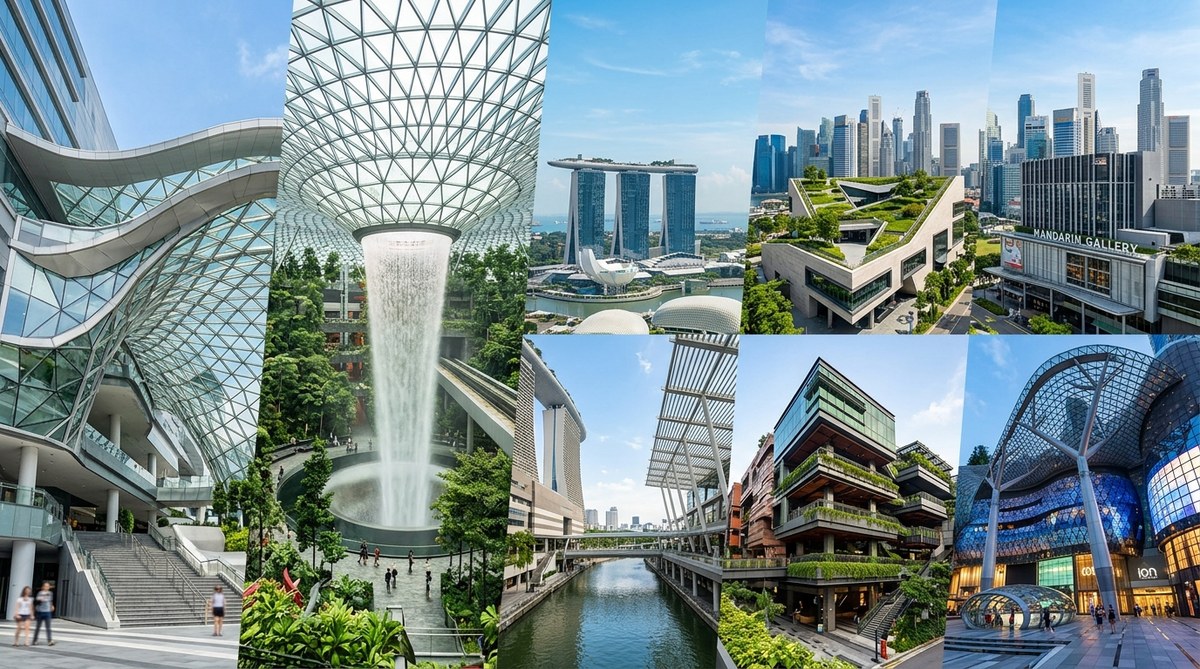
Jewel Changi Airport is perhaps the most famous example of innovative mall architecture. Designed by Moshe Safdie, this structure combines a transport hub with a lush indoor garden. Its glass and steel facade resembles a giant crystal formation. Inside, the rainforest-themed gardens and the HSBC Rain Vortex create a mesmerizing atmosphere. The building’s design prioritizes sustainability with natural ventilation and energy-efficient systems, making it a true marvel of contemporary architecture.
Marina Bay Sands
While primarily known for its sky park and luxury offerings, the Marina Bay Sands complex also features a striking architectural design. The three towers are connected by the iconic boat-shaped SkyPark at the top. The structure pushes the limits of engineering with its cantilevered platforms and innovative use of concrete and glass. The complex’s overall aesthetic complements Singapore’s futuristic skyline, making it a must-visit sight for design lovers.
The Shoppes at Marina Bay Sands
The Shoppes incorporate elegant design elements that evoke luxury and modernity. The use of vast glass facades, water features, and open spaces creates an airy, inviting environment. The mall seamlessly integrates with the surrounding cityscape, offering panoramic views of the skyline and the bay. Its architecture exemplifies how form and function can blend to produce a shopping environment that is both beautiful and practical.
VivoCity
VivoCity is one of Singapore’s largest malls, renowned for its creative architecture. Its design features a series of interconnected blocks with open-air walkways and rooftop gardens. The building’s curved, wave-like roof structures add a dynamic element to the skyline. VivoCity’s emphasis on natural light and open spaces makes it a favorite among visitors and architecture buffs alike.
Gardens by the Bay
Although technically a garden, the Supertree Grove and the conservatories are part of a larger urban landscape that includes shopping and entertainment facilities. Designed by Wilkinson Eyre and Grant Associates, these structures mimic natural forms with their towering, tree-like frames. The integration of sustainable technologies like solar panels and rainwater harvesting underscores Singapore’s commitment to green architecture.
Techniques that elevate mall design in Singapore
Designers in Singapore employ various techniques to achieve stunning results:
- Use of glass and steel to maximize natural light and create transparency
- Incorporation of green spaces and water features for aesthetic and environmental benefits
- Structural innovations like cantilevered platforms and flowing curves
- Sustainable features such as solar panels, rainwater harvesting, and natural ventilation
- Cultural motifs blended with modern forms to reflect local heritage
Common mistakes to avoid in mall architecture
| Technique | Mistake to Avoid |
|---|---|
| Overly complex facade | Creating designs that are difficult to maintain or cost-prohibitive |
| Ignoring environmental sustainability | Failing to incorporate eco-friendly features can lead to higher operational costs |
| Poor integration with surroundings | Designs that clash with the cityscape can diminish visual harmony |
| Excessive ornamentation | Over-decorating can distract from the building’s functionality and elegance |
Architecture expert Jane Lim notes, “Singapore’s best malls show how innovation and cultural influences can come together to produce spaces that are both beautiful and sustainable. Striking the right balance is key to creating landmarks that stand the test of time.”
Visiting Singapore’s architectural landmarks
For those interested in seeing these structures firsthand, planning a route that includes multiple sites can be rewarding. Many malls are connected via underground walkways or skybridges, making it easy to traverse without facing the tropical heat. For a comprehensive guide on navigating these impressive buildings, you might want to check out the detailed tips on
Practical tips for appreciating mall architecture
- Take guided tours or join architecture-focused walks offered by local groups.
- Bring a camera to capture the intricate details and innovative designs.
- Read about the architects behind each project to deepen your understanding.
- Visit during different times of the day to see how natural light influences the structures.
Why Singapore’s malls are more than just shopping destinations
Singapore’s mall architecture and design reflect the city’s broader identity: a blend of tradition and cutting-edge innovation. These buildings serve as cultural symbols and sources of inspiration for architects worldwide. They demonstrate how commercial spaces can also be artistic expressions.
Final thoughts on Singapore’s architectural marvels
Visiting these malls offers more than a shopping experience. They are living examples of how architecture can shape city life, inspire creativity, and promote sustainability. Whether you are an architecture enthusiast or a casual visitor, taking the time to appreciate their design details enriches your understanding of Singapore’s vibrant urban landscape.
Designing the future of Singapore’s shopping landscape
You can carry the same curiosity and appreciation into your own projects or travels. Studying these architectural marvels provides insights into innovative building techniques and sustainable design principles. Keep an eye out for new developments as Singapore continues to push the boundaries of architecture. Embrace the opportunity to see how function and art come together in the city’s most impressive malls.