
Are Food Courts in Singapore Malls Worth Visiting in 2026?
You’ve probably heard Singapore is a food paradise, but figuring out where to eat can feel overwhelming when you’re planning your trip. Mall food courts sit somewhere between hawker centres and restaurants, and tourists often wonder if they deliver real value or just convenience with a premium price tag.
Food courts in Singapore malls typically cost 20 to 40 percent more than hawker centres but offer air conditioning, consistent hygiene standards, and tourist-friendly menus. They’re worth visiting for convenience, comfort, and variety, especially during peak heat or rain. However, hawker centres remain unbeatable for authentic local flavours and budget dining. The best approach is mixing both experiences based on your schedule and comfort needs during your trip.
Price comparison between mall food courts and hawker centres
Let’s talk numbers first.
A chicken rice plate at a hawker centre costs between $3.50 and $5.50. The same dish in a mall food court runs $5.50 to $8.50. That’s a significant jump.
Drinks follow the same pattern. A sugar cane juice at a hawker centre costs around $1.50. In a mall food court, expect to pay $2.50 to $3.50 for the same drink.
Here’s a realistic breakdown of lunch costs:
| Item | Hawker Centre | Mall Food Court | Difference |
|---|---|---|---|
| Main dish | $4.00 | $6.50 | +63% |
| Drink | $1.50 | $2.80 | +87% |
| Side dish | $2.50 | $4.00 | +60% |
| Total | $8.00 | $13.30 | +66% |
If you eat three meals a day at mall food courts instead of hawker centres, you’ll spend an extra $15 to $20 daily. Over a week-long trip, that’s $105 to $140 more.
But price isn’t the whole story.
What you actually get for the extra cost
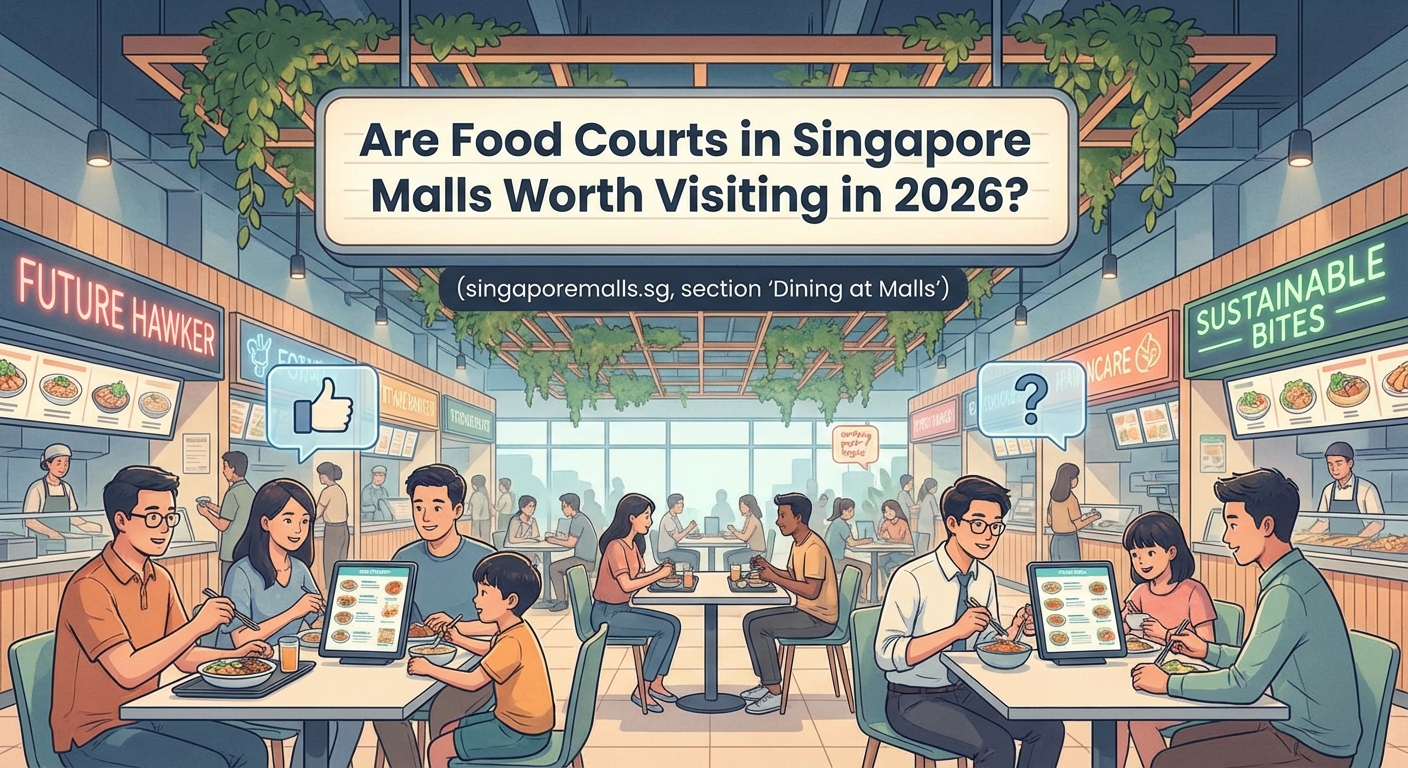
Mall food courts charge more because they offer tangible benefits that matter to many visitors.
Air conditioning makes a massive difference. Singapore’s heat and humidity can drain you fast. Spending an hour in a comfortable, cool environment while eating helps you recharge for the rest of your day.
Cleanliness standards are consistently higher. Tables get wiped down more frequently. Floors stay cleaner. Toilets are better maintained and easier to find.
Payment options are more flexible. Most mall food courts accept credit cards, contactless payment, and mobile wallets. Many hawker centres still operate cash-only, though this is slowly changing.
Menus often include English descriptions and photos. Staff at mall food courts typically speak more English. If you’re nervous about ordering or have dietary restrictions, this reduces stress significantly.
The variety under one roof is impressive. You can have Japanese ramen while your travel companion eats Indian curry and your kids get pasta. Everyone stays happy without walking to multiple locations.
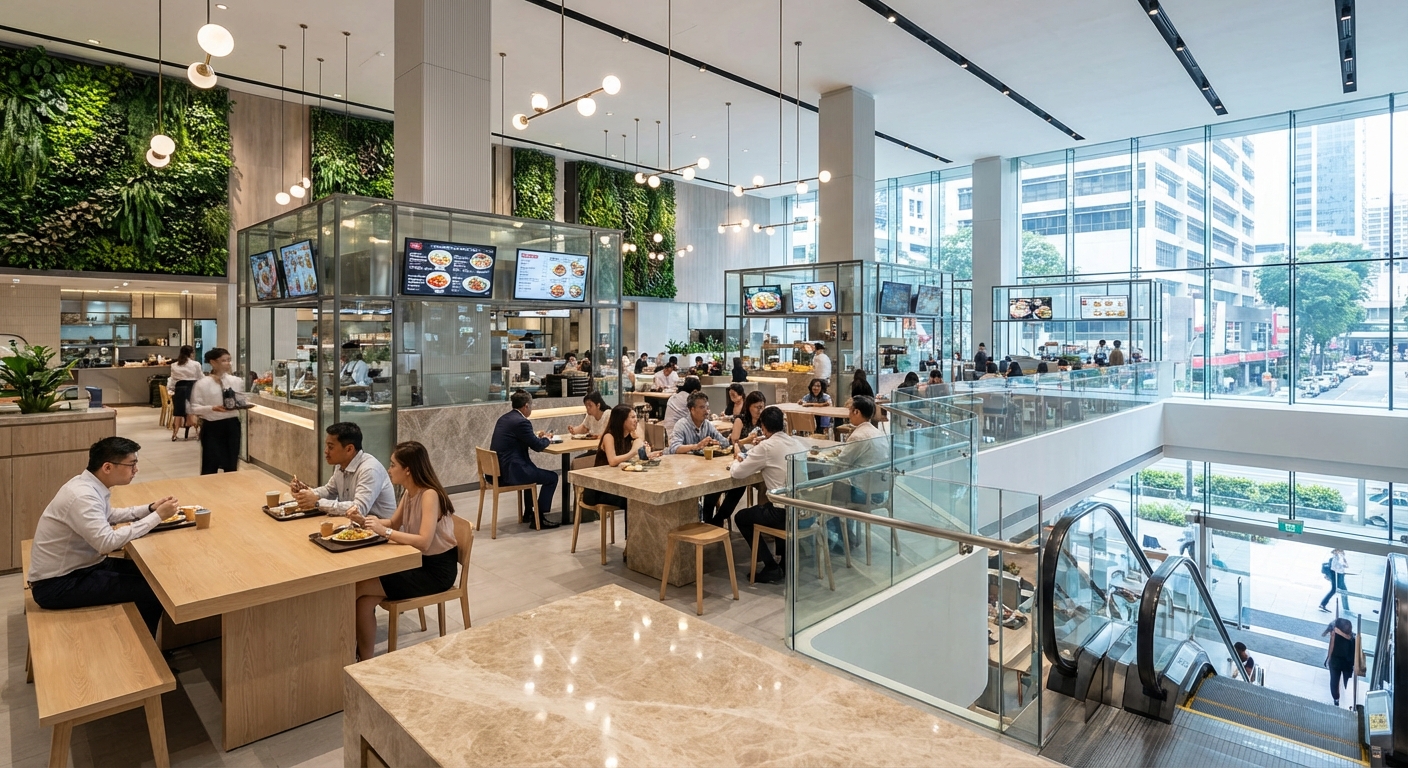
Mall food courts serve as a comfortable middle ground for tourists who want local flavours without the sensory overload that some hawker centres can create, especially for first-time visitors.
Where mall food courts actually excel
Some situations make mall food courts the smarter choice regardless of price.
Rainy days: Singapore gets sudden, heavy downpours. Hawker centres with open-air seating become unusable. Mall food courts keep you dry and comfortable. If you’re already navigating between connected malls in Singapore, staying indoors for lunch makes perfect sense.
Peak lunch hours: Popular hawker centres get packed between 12:00 PM and 1:30 PM. Finding a seat becomes a competitive sport. Mall food courts have more seating and better crowd flow.
Travelling with young children: Mall food courts offer high chairs, nearby nursing rooms, and family-friendly facilities. Many are located near play areas and kids activities, making meal planning easier for parents.
Late-night dining: Most hawker centres close by 8:00 PM or 9:00 PM. Several malls stay open past midnight with food courts serving until 10:00 PM or later.
Food safety concerns: If you have a sensitive stomach or strict dietary requirements, mall food courts provide more consistent food handling standards and clearer ingredient information.
The hawker centre experience you shouldn’t skip
Despite the advantages of mall food courts, hawker centres remain essential to understanding Singapore’s food culture.
The flavours are more authentic. Many hawker stalls have operated for decades, perfecting single dishes. These aren’t corporate chains following standardized recipes. They’re individual vendors who’ve built reputations on their cooking.
The atmosphere is uniquely Singaporean. Watching locals queue at their favourite stalls, hearing multiple languages at surrounding tables, and seeing the organized chaos of a busy hawker centre gives you genuine cultural insight.
Prices reflect what locals actually pay for daily meals. This matters if you want to experience Singapore as residents do, not just as a tourist attraction.
The variety is staggering. Large hawker centres like Maxwell Food Centre or Chinatown Complex have 50 to 100 different stalls. You could eat there daily for months without repeating a dish.
Here’s a practical approach:
- Start with a mall food court for your first meal in Singapore to ease into local food without pressure.
- Visit a popular hawker centre during off-peak hours (2:30 PM to 5:00 PM) when crowds are lighter.
- Mix both options based on your daily schedule, weather, and comfort level.
Common mistakes tourists make with food courts
Assuming all mall food courts are identical: Quality varies significantly. Food Republic and Food Junction are established chains with good standards. Random food courts in older malls might not offer much advantage over hawker centres.
Ordering too much food: Portions at both hawker centres and mall food courts are generous. Start with one dish per person. You can always order more.
Skipping local chains: Brands like Old Chang Kee, Toast Box, and Ya Kun Kaya Toast appear in many mall food courts. These offer reliable local favourites at reasonable prices.
Ignoring peak hours: Even mall food courts get crowded during lunch rushes. Visit between 11:00 AM and 11:45 AM or after 1:30 PM for a more relaxed experience.
Not checking halal options: If you need halal food, mall food courts clearly mark certified stalls, making identification easier than at some hawker centres.
Forgetting to return trays: Most mall food courts expect you to clear your own table and return trays to designated areas. It’s standard practice and considered polite.
Best mall food courts for tourists
If you decide mall food courts fit your travel style, these locations offer the best experience:
ION Orchard Food Opera: Located in the heart of Orchard Road, this food court combines convenience with quality. Prices are higher, but the variety and cleanliness are excellent.
VivoCity Food Republic: Near Sentosa, this location works perfectly if you’re spending the day at the beach or Universal Studios. The waterfront views add to the experience.
Jewel Changi Airport: If you have a long layover or are staying near the airport, Jewel’s food court offers an impressive range of local and international options in a stunning setting.
Bugis Junction: This mall bridges the gap between tourist area and local neighbourhood. The food court prices are more moderate while maintaining good standards.
Marina Square: Three food courts under one roof give you exceptional variety. It’s also connected to other malls, making it easy to explore the area after eating.
For a comprehensive list of which malls have the best food court options, check out the top shopping malls with excellent food courts.
Making food courts work within your budget
You can reduce costs at mall food courts with these strategies:
- Order plain rice or noodles separately and add cheaper side dishes instead of combo meals.
- Bring your own water bottle and skip beverages (most malls have water fountains).
- Look for lunch specials between 11:00 AM and 2:00 PM when some stalls offer promotions.
- Share dishes if portions look large (they usually are).
- Check if your credit card offers dining promotions at specific malls.
Some malls also have membership programs that include dining discounts. If you’re staying in Singapore for more than a few days, these can add up.
When to choose each option
Use this framework to decide where to eat:
Choose mall food courts when:
– Weather is extremely hot or rainy
– You’re shopping and want to stay in the same building
– Travelling with elderly relatives or young children
– Time is limited and you need efficient service
– You prefer consistent hygiene standards
– Language barriers cause anxiety
Choose hawker centres when:
– Budget is a primary concern
– You want authentic local atmosphere
– You’re comfortable navigating less tourist-friendly environments
– You have time to explore and queue
– You want the widest possible variety
– You’re following local food recommendations
Mix both approaches when:
– You’re staying more than three days
– You want balanced cultural experience and comfort
– Different travel companions have different preferences
– You’re testing your comfort zone gradually
Food courts as part of your overall Singapore dining plan
Think of food courts as one tool in your dining strategy, not a binary choice against hawker centres.
Your trip might look like this: breakfast at your hotel, lunch at a hawker centre when you’re sightseeing in a neighbourhood, afternoon snack at a hidden cafe in a mall, and dinner at a mall food court because you’re shopping anyway.
This approach gives you authentic experiences without sacrificing comfort when you need it.
Singapore’s food scene is remarkably diverse. Mall food courts represent just one layer of that diversity. They’re not “tourist traps” if you use them strategically. They’re not replacements for hawker centres either.
The question isn’t whether food courts in Singapore are worth it in absolute terms. The real question is whether they’re worth it for your specific situation, budget, and travel style.
Finding your own balance
Food courts in Singapore malls serve a genuine purpose beyond convenience. They make local cuisine accessible to visitors who might feel overwhelmed by traditional hawker centres while maintaining reasonable quality and variety.
Are they worth the premium over hawker centres? That depends entirely on what you value. If air conditioning, English menus, and modern facilities matter to you, the extra cost delivers real benefits. If you prioritize authenticity and budget, hawker centres remain the better choice.
The smartest approach treats both as valuable options rather than competitors. Use mall food courts when they solve specific problems during your trip. Visit hawker centres when you want deeper cultural immersion. Your stomach and your wallet will thank you for the balanced approach.